Keeping Your Farm Well: How Water Quality Can Impact Livestock
Authors: Alec Janis and MacKenzie White
Alec.janis@uconn.edu
Reviewer: Richard Meinert, UConn Extension
Publication EXT171 | October 2025
Introduction
Humans have been utilizing groundwater and surface water for agriculture for over 10,000 years. Today, many agricultural operations rely on wells and surface waters to irrigate their lands, and supply drinking water to their livestock.
Most people recognize that clean water is among the most, if not the most, important nutrient for maintaining livestock health. However, what many may not realize is that even if water appears clear and odorless, it can still contain harmful contaminants.
Although research on how poor water quality impacts agricultural productivity is limited, we know that elevated levels of certain contaminants can cause livestock to stop eating, stunt growth, or even lead to death. Whether your animals are drinking from a trough, pond, or puddle, it is important to know what’s in their water.
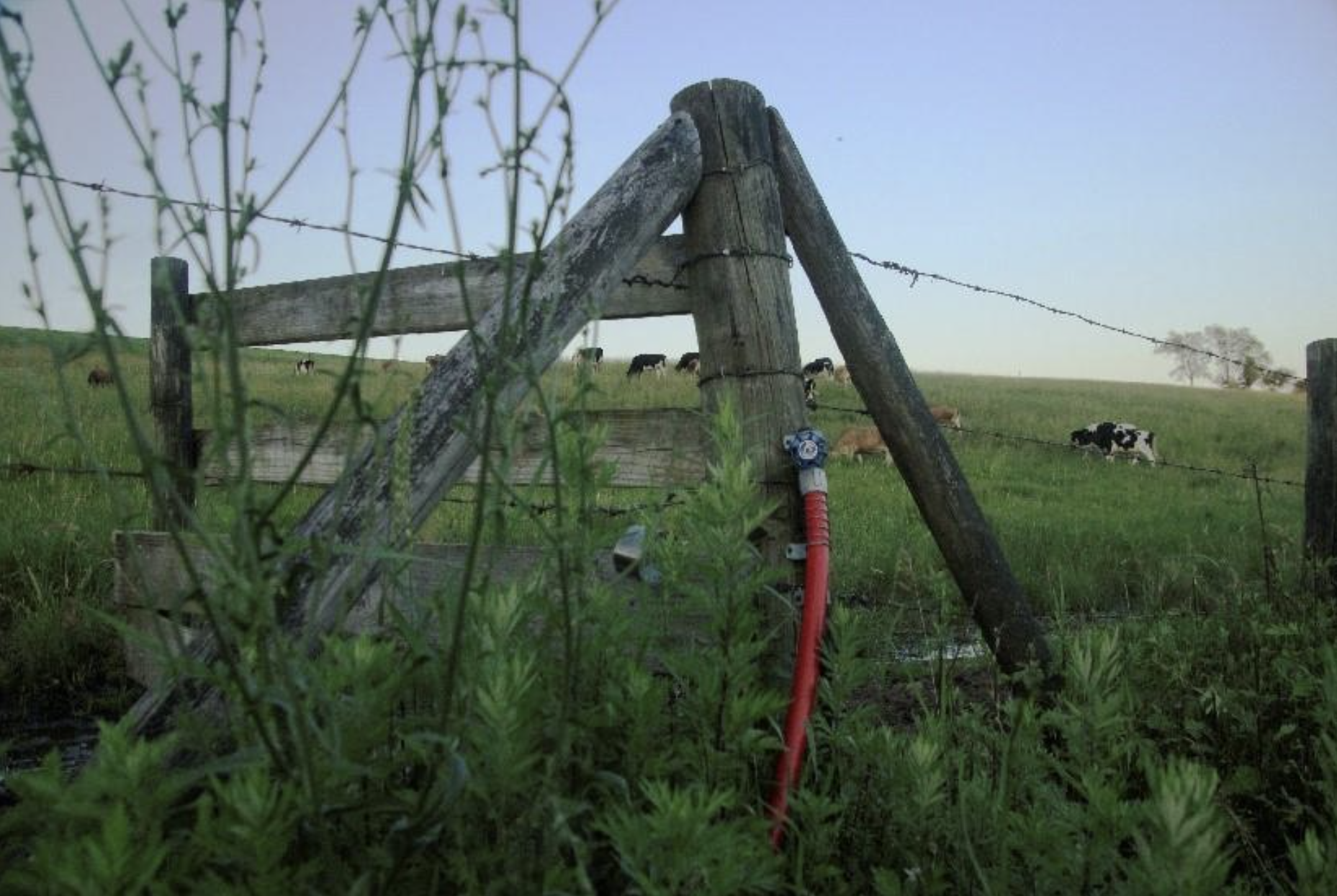
This fact sheet is an overview of an upcoming, three-part series outlining how bacteria, infrastructure, and agricultural runoff can potentially impact livestock health and productivity. Each fact sheet will include recommendations for addressing specific parameters.
This overview is intended to help you identify potential causes of water-related issues on your farm. Be aware that many of the issues described here are uncommon and may only occur in rare cases. Use the table below as a quick reference to identify which contaminant levels may be of concern.
Bacterial Contamination
Bacteria may cause acute issues for many livestock. Surface waters are incredibly vulnerable to toxic algal blooms. While wells are much less vulnerable to this contamination, poorly constructed or damaged, shallow wells can be contaminated by toxic algae.
Private wells, both dug and drilled, are, however, very susceptible to total coliform bacteria. While not harmful, their presence indicates surface contaminants are entering the well. Understanding how to limit bacterial exposure from drinking water will ensure you’re protecting your livestock’s health.
Infrastructure Contamination
Poorly functioning infrastructure can negatively affect livestock health. Highly acidic water corrodes pipes, causing metals such as lead and copper to leach into drinking water.
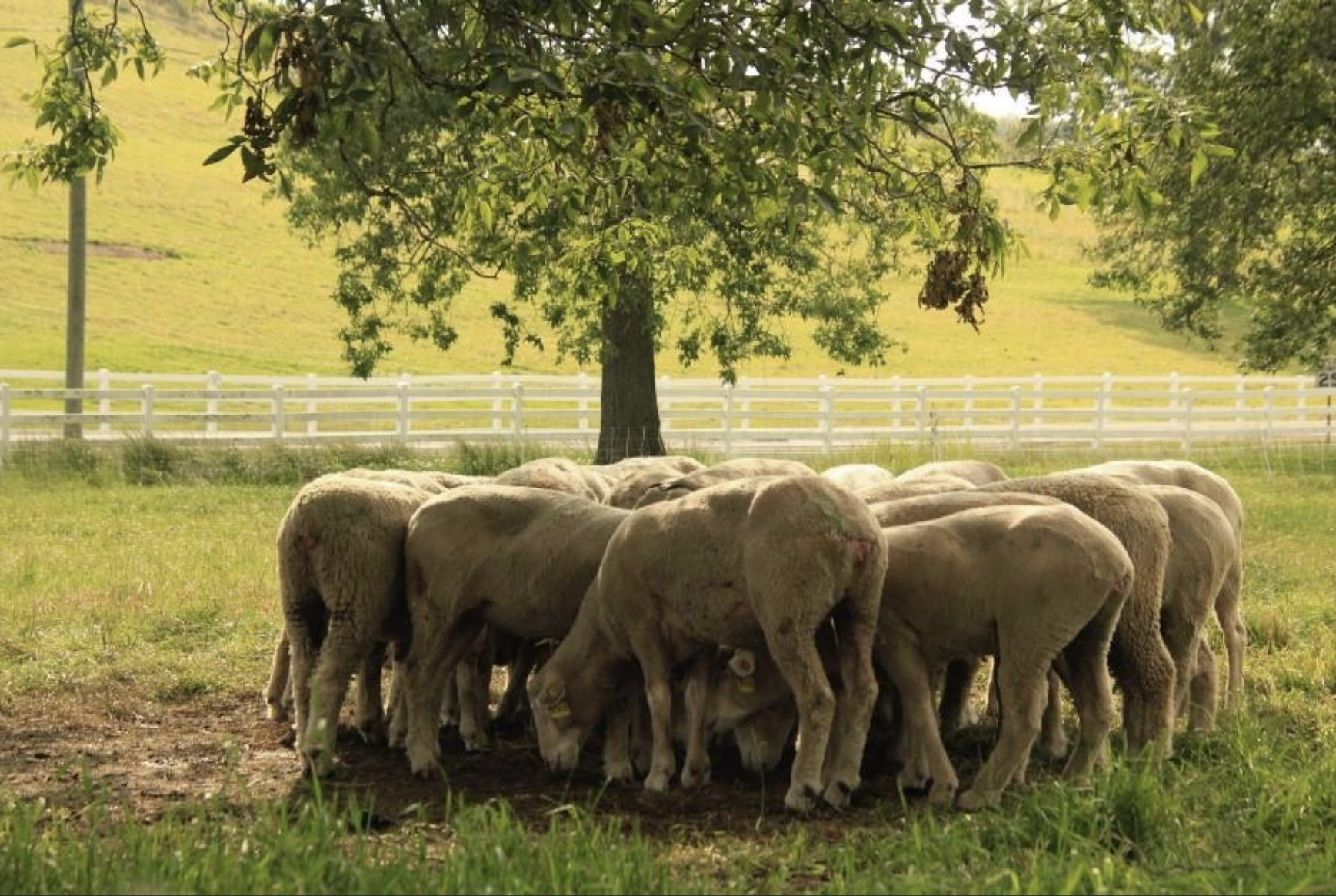
Sheep are highly sensitive to copper and can become seriously ill if consuming water with elevated levels. Conversely, very hard water can protect plumbing from corrosion as limescale builds in pipes, but will negatively impact water pressure and damage equipment.
Additionally, Connecticut bedrock contains high levels of iron. Excess iron can impact livestock productivity, create foul odors, and clog pipes.
Agriculture Runoff
From animal feed to fertilizers, nitrogen is an essential part of any farm. However, excess nitrogen can be detrimental to livestock health causing suffocation-like symptoms in most animals. Some forms of nitrogen, such as nitrates, are as soluble as sugar, causing them to quickly dissolve in water traveling into groundwater or surface waters. Similarly, certain pesticides and herbicides leach into groundwater.
For a quick summary of common Connecticut contaminants that may impact livestock health, use the table below.
| Parameter | Safe (preferred) | Cautious (problems can occur) | Dangerous/Toxic | Symptoms or Signs of Toxicity
*Livestock species, size, age and physiological state can influence the degree of poisoning or toxicity |
| Algal Blooms | None present | Low growth -may reduce water intake or taint the water | Dense blooms (toxic cyanobacteria risk, unsafe) | Can cause vomiting, diarrhea, rash, difficulty breathing, general weakness, liver failure, seizures, or drooling. In severe cases, animals may suffer convulsions and die. |
| Coliform Bacteria (CFU/100ml) | 0 (none detected, absent) | 1-10 CFU/100mL (possible contamination risk) | > 10 CFU/100mL (unsafe, disease risk) | Can cause illnesses like scours (diarrhea) in young animals and digestive upset in adults, leading to reduced water/feed intake and potentially decrease productivity. |
| Copper (mg/L) | < 0.5 mg/L | 0.5 - 1.0 mg/L (may reduce water intake or performance) | > 1.0 mg/L (water could have a metalic taste, toxic, liver damage) | Can cause weakness, depression, lack of appetite, fever, dark red or brown urine, diarrhea, jaundice, or difficulty breathing.
*Sudden death in sheep - sheep have narrower margins for copper intake |
| Iron (mg/L) | < 0.3 mg/L | 0.3 - 1.0 mg/L (may reduce water intake, unpalatable) | > 1.0 mg/L (toxic, performance losses) | Can cause reduction in water intake, milk production, and/or overall performance. |
| Nitrate (mg/L NO3-N) | 0-20 ppm | 20 -40 ppm (Safe with low-nitrate feeds, but may worsen nitrate issues when combined with high-nitrate feeds) | > 40ppm | Can cause rapid breathing, muscle tremors, weakness, bluish mucous membranes, collaspe, and in severe cases, sudden death. |
| Pesticides | Not detectable
*Safe levels have not been determined |
Detected at low levels | High pesticide residues (toxic, unsafe) | May affect water intake and animal performance. |
| pH | 6.8 - 7.5 | 5.5 - 6.7 or 7.5 - 8.5 | < 5.5 or > 8.5 - 10 | Highly alkaline water can cause digestive upsets, diarrhea, poor feed conversion, and can reduce feed/water intake. |
Resources
Bagley, C., Kotuby-Amacher, J., Farrell-Poe, K., Analysis of Water Quality for Livestock. (July 1997). Utah State University Extension. https://extension.vetmed.ufl.edu/wp-content/blogs.dir/3072/files/2011/10/Livestock-Water-Quality.pdf
Beede, D. (August 2019). Evaluation of Water Quality and Nutrition for Dairy Cattle. DairyExNet. https://dairy-cattle.extension.org/evaluation-of-water-quality-and-nutrition-for-dairy-cattle/#Other_Factors_Affecting_Water_Intake
Buck, W. B., & Sharma, R. M. (1969). Copper Toxicity’ in Sheep. Journal of Chemical Education
Carmichael, W. (September 2024). Algal Poisoning. Merck Manual Veterinary Manual. https://www.merckvetmanual.com/special-pet-topics/poisoning/algal-poisoning
The Center for Food Security & Public Safety, Iowa State University. (May 2013). Water Quality for Dairy Cattle. https://www.cfsph.iastate.edu/Infection_Control/Routes/Water_Quality_Dairy_Cattle.pdf
Duppstadt, L. (June 2024). Livestock Water Quality. Penn State Extension. https://extension.psu.edu/livestock-water-quality
Irsik, M. (April 2010). Water Quality for Livestock. University of Florida College of Veterinary Medicine. https://vetmed-extension.sites.medinfo.ufl.edu/files/2012/02/Water-quality-for-Livestock-FCA-mag-article-2010-april210sent.pdf
Levin, R., Villanueva, C. M., Beene, D., Cradock, A. L., Donat-Vargas, C., Lewis, J., Martinez-Morata, I., Minovi, D., Nigra, A. E., Olson, E. D., Schaider, L. A., Ward, M. H., & Deziel, N. C. (2024). US drinking water quality: exposure risk profiles for seven legacy and emerging contaminants. In Journal of Exposure Science and Environmental Epidemiology (Vol. 34, Issue 1, pp. 3–22). Springer Nature. https://doi.org/10.1038/s41370-023-00597-z
The Livestock Project. (n.d.). Livestock and Toxins. https://www.cfsph.iastate.edu/thelivestockproject/livestock-and-toxins/
Missouri Department of Natural Resources. (n.d.). Harmful Algal Blooms and Animal Health. https://dnr.mo.gov/water/hows-water/pollutants-sources/harmful-algal-blooms-habs/animal-health#:~:text=There%20have%20been%20cases%20in,toxin%20effects%20are%20more%20acute
Peltenburg, E. (2012). Wasserwirtschaftliche Innovationen im archäologischen Kontext: von den prähistorischen Anfängen bis zu den Metropolen der Antike - East Mediterranean water wells of the 9th–7th millennium BC. People - Cultures - Traditions, 5(Research Cluster 2), 69–70.
Pfost, D., Fulhage, C. (February 2001) Water Quality for Livestock Drinking. University of Missouri Extension Publications. https://extension.missouri.edu/publications/eq381#:~:text=The%20U.S.%20Environmental%20Protection%20Agency,are%20listed%20in%20Table%201
Swistock, B. (May 2024). Interpreting Drinking Water Tests for Dairy Cows. Penn State Extension. https://extension.psu.edu/interpreting-drinking-water-tests-for-dairy-cows
Thompson, L. (September 2024). Nitrate and Nitrite Poisoning in Animals. Merck Manual Veterinary Manual. https://www.merckvetmanual.com/toxicology/nitrate-and-nitrite-poisoning/nitrate-and-nitrite-poisoning-in-animals
Todd, J. R. (1969). Chronic copper toxicity of ruminants. Proceedings of the Nutrition Society, 28 (157), 87. https://doi.org/10.1079/PNS19690037
The information in this document is for educational purposes only. The recommendations contained are based on the best available knowledge at the time of publication. Any reference to commercial products, trade or brand names is for information only, and no endorsement or approval is intended. UConn Extension does not guarantee or warrant the standard of any product referenced or imply approval of the product to the exclusion of others which also may be available. The University of Connecticut, UConn Extension, College of Agriculture, Health and Natural Resources is an equal opportunity program provider and employer.