Keeping Your Farm Well: Bacterial Contamination
Authors: Alec Janis and MacKenzie White
Alec.janis@uconn.edu
Reviewer: Richard Meinert, UConn Extension
Publication EXT172 | October 2025
Introduction
If you asked the average person what lives on a farm, they might say cows, pigs, and chickens. Few would think of bacteria. These microscopic organisms are everywhere, including in the water your livestock drink. While most are harmless, some waterborne bacteria can make animals sick or even cause more severe poisoning.
This factsheet explores how bacterial contamination in water can affect livestock health and productivity. It is the first in a three-part series outlining how bacteria, infrastructure, and agricultural runoff can potentially impact livestock health and productivity.
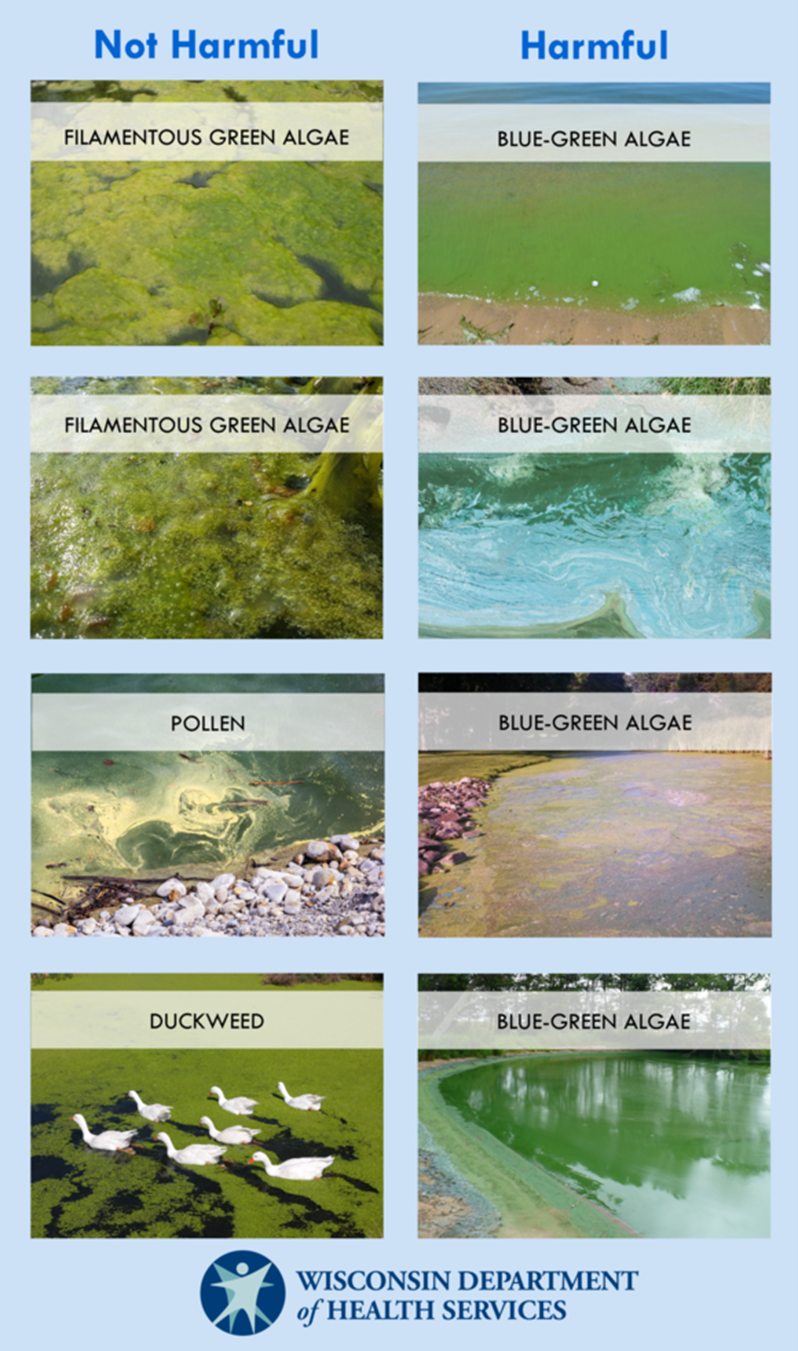
Harmful Algal Blooms (Cyanobacteria)
Cyanobacteria are microscopic organisms that live in any environment that receives sunlight. They play a pivotal role in developing soil ecosystems by processing and increasing nutrient availability. However, when they grow in aquatic environments under the right conditions, they can form harmful algal blooms (HABs). These blooms release toxins that can poison livestock.
Cyanobacteria require sunlight, nutrients (predominately nitrogen, phosphorus, and iron), and warm temperatures to grow. In most freshwater systems, phosphorus is the limiting nutrient in cyanobacterial growth since many cyanobacteria can take nitrogen directly from the air at the water’s surface (Missouri Department of Natural Resources, n.d.; Whitton, 2012).
Cyanobacteria are found in nearly every body of water on earth and have existed as far back as 3.5 billion years. While complete removal is nearly impossible, blooms can be managed through chemical, biological, or mechanical treatments. The best prevention, however, is managing nutrients in the surrounding areas and reducing livestock access to stagnant water before a bloom begins (USDA, 2023).
Symptoms of livestock exposure to a harmful algal bloom may include GI distress, muscle discoordination, excessive salivation, rash, fatigue, staggered walking, difficulty breathing, weakness, convulsions, seizures, and liver failure, depending on the toxins created by the bacteria (Missouri Department of Natural Resources, n.d.; USDA, 2023; Centers for Disease Control, 2024).
Coliforms: Indicator Bacteria
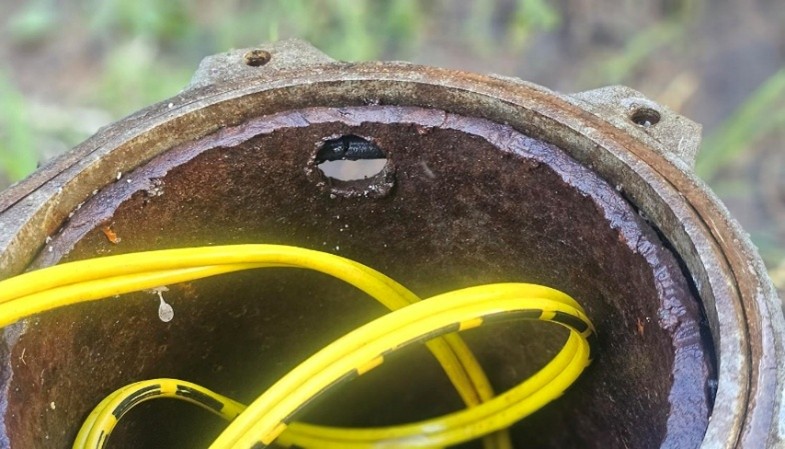
Coliforms are a family of bacteria that exist naturally in soils as well as in the gut of warm-blooded mammals (Levin et al., 2024). In wells, coliform bacteria can come from numerous sources, such as poorly functioning or damaged septic systems, animal or pet waste, cracked well caps or casings that allow for organisms to directly enter the well, and inundation during flooding events. It should be noted that dug wells are more likely to become contaminated by surface water than drilled wells (CT DPH 2009; Duppstadt 2024).
Surface waters such as small pooling areas, ponds and rivers can become contaminated through these same mechanisms, as well as stormwater runoff.
Although most coliform bacteria do not pose any health issues to livestock, their presence is an indicator that surface water has entered a well. When this occurs, the risk to livestock health increases significantly. Fecal coliforms, including E. coli, come from animal and human waste and can cause acute GI distress and dehydration, reducing productivity. Ideally, coliform bacteria levels should be as close to 0 colonies per 100mL as possible (CT DPH, 2009; Duppstadt, 2024).
As of May 6th, 2024 the Food Safety Modernization Act requires covered farms to ensure agricultural water is of adequate sanitary quality under the Final Rule on Pre-harvest and Post-harvest Agricultural Water. If the well supplying water to your crops is also used for livestock, you may already be testing for these bacteria.
For more details on the bacterial contamination, refer to the contaminant table included in the series overview and below.
| Parameter | Safe (preferred) | Cautious (problems can occur) | Dangerous/Toxic | Symptoms or Signs of Toxicity
*Livestock species, size, age and physiological state can influence the degree of poisoning or toxicity |
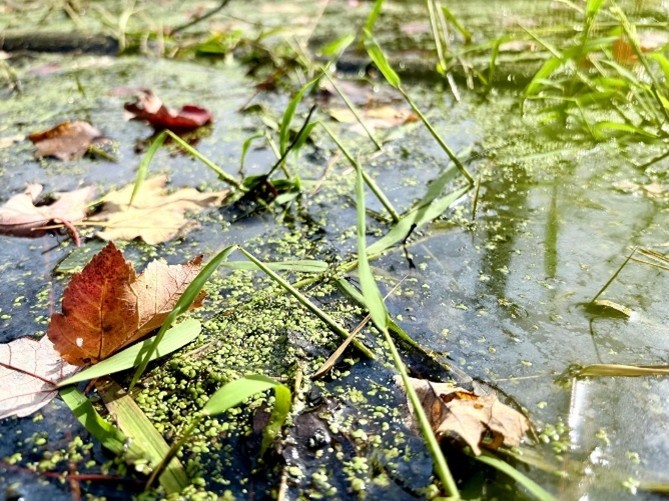
| Algal Blooms | None present | Low growth -may reduce water intake or taint the water | Dense blooms (toxic cyanobacteria risk, unsafe) | Can cause vomiting, diarrhea, rash, difficulty breathing, general weakness, liver failure, seizures, or drooling. In severe cases, animals may suffer convulsions and die. |
| Coliform Bacteria (CFU/100ml) | 0 (none detected, absent) | 1-10 CFU/100mL (possible contamination risk) | > 10 CFU/100mL (unsafe, disease risk) | Can cause illnesses like scours (diarrhea) in young animals and digestive upset in adults, leading to reduced water/feed intake and potentially decrease productivity. |
| Copper (mg/L) | < 0.5 mg/L | 0.5 - 1.0 mg/L (may reduce water intake or performance) | > 1.0 mg/L (water could have a metalic taste, toxic, liver damage) | Can cause weakness, depression, lack of appetite, fever, dark red or brown urine, diarrhea, jaundice, or difficulty breathing.
*Sudden death in sheep - sheep have narrower margins for copper intake |
| Iron (mg/L) | < 0.3 mg/L | 0.3 - 1.0 mg/L (may reduce water intake, unpalatable) | > 1.0 mg/L (toxic, performance losses) | Can cause reduction in water intake, milk production, and/or overall performance. |
| Nitrate (mg/L NO3-N) | 0-20 ppm | 20 -40 ppm (Safe with low-nitrate feeds, but may worsen nitrate issues when combined with high-nitrate feeds) | > 40ppm | Can cause rapid breathing, muscle tremors, weakness, bluish mucous membranes, collaspe, and in severe cases, sudden death. |
| Pesticides | Not detectable
*Safe levels have not been determined |
Detected at low levels | High pesticide residues (toxic, unsafe) | May affect water intake and animal performance. |
| pH | 6.8 - 7.5 | 5.5 - 6.7 or 7.5 - 8.5 | < 5.5 or > 8.5 - 10 | Highly alkaline water can cause digestive upsets, diarrhea, poor feed conversion, and can reduce feed/water intake. |
Resources
Connecticut Department of Public Health (CTDPH). (2009). Publication No. 4: Bacteria in Private Drinking Water Wells. https://portal.ct.gov/-/media/Departments-and-Agencies/DPH/dph/environmental_health/pdf/ 04BacteriainPrivateDrinkingWaterWells0409pdf.pdf
Duppstadt, L. (June 2024). Livestock Water Quality. Penn State Extension. https://extension.psu.edu/livestock-water-quality
Missouri Department of Natural Resources. (n.d.). Harmful Algal Blooms and Animal Health. https://dnr.mo.gov/water/hows-water/pollutants-sources/harmful-algal-blooms-habs/animal-health
Whitton, B. A. (Ed.). (2012). Ecology of Cyanobacteria II. Springer Science+Business Media. https://doi.org/10.1007/978-94-007-3855-3
U.S. Department of Agriculture (USDA). (2023). Harmful Algal Blooms (HABs) How to Protect Livestock Water Sources and Limit Livestock Exposure. https://www.nrcs.usda.gov/sites/default/files/2023-07/NRCS-Harmful-Algal-Blooms-fact-sheet-NATIONAL.pdf
The information in this document is for educational purposes only. The recommendations contained are based on the best available knowledge at the time of publication. Any reference to commercial products, trade or brand names is for information only, and no endorsement or approval is intended. UConn Extension does not guarantee or warrant the standard of any product referenced or imply approval of the product to the exclusion of others which also may be available. The University of Connecticut, UConn Extension, College of Agriculture, Health and Natural Resources is an equal opportunity program provider and employer.