Staying Active During and After Cancer: What You Need to Know
Authors: Caroline N. Webb, MS and Victoria R. DeScenza, PhD
Victoria.descenza@uconn.edu
Reviewer: Allison MacKenzie, UConn
Publication EXT176 | December 2025
Introduction
Cancer continues to be a major public health concern in the United States, with roughly two million new diagnoses every year. Nearly everyone has been personally affected by this disease, as over one in three Americans will be diagnosed in their lifetime. Cancer can place an incredibly difficult burden on both survivors and caretakers, yet there are ways for those impacted to improve health outcomes and quality of life.
Exercise is one of these strategies. Exercise has been inversely associated with risks for thirteen different types of cancer: breast, bladder, rectal, head and neck, colon, myeloma, myeloid leukemia, endometrial, gastric cardia, kidney, lung, liver, and esophageal adenocarcinoma.
Exercise also has benefits for those who are currently undergoing or recently completed cancer treatment. While it should be acknowledged that additional barriers to exercise exist for cancer survivors, exercise can play an important part in a lifestyle-medicine approach to treatment as well as mitigate the side effects of common treatment plans. This fact sheet aims to promote exercise as a safe and effective component of a lifestyle medicine approach for cancer survivors and is intended for cancer survivors, caregivers and family members, and health and extension professionals.
This factsheet is intended for use by exercise professionals and those affected by cancer, including cancer survivors and caretakers navigating the disease. The aim of this fact sheet is to discuss safe, evidence-based and effective exercise recommendations for cancer survivors.

Background
While cancer treatments have evolved to become more efficient, personalized, and targeted, they often still cause significant side effects. In addition to targeting the cancer itself, many treatments also target other rapidly dividing cells in the body, resulting in symptoms including nausea, fatigue, neuropathy, lymphedema, and more. Symptoms can be wide-ranging and individual, depending on the specific treatment and type of cancer. Fortunately, exercise can be a useful tool to combat some of the commonly experienced symptoms both during and after treatment.
A growing body of literature supports safe exercise during cancer treatment. Aerobic exercise, performed three times per week for 30-60 minutes, has been shown to help manage cancer-related fatigue, health-related quality of life, physical function, anxiety, depression, and sleep. Similarly, resistance exercise performed two times per week has been shown to help manage lymphedema and positively impact bone health in those with cancer. The consensus of major organizations is now that some movement is better than none. If exercising for 30-60 minutes at a time seems daunting, it’s okay to start with as little as five minutes of movement at a time or even exercises that can be performed sitting!
In addition to those currently undergoing treatment, exercise can also positively influence health outcomes for cancer survivors who have completed primary treatments. In a large, nationally representative sample, 150 minutes/week of physical activity was associated with reduced risk of cancer-specific and all-cause mortality among cancer survivors, while additional studies have found a correlation between exercise and a reduced risk of cancer recurrence. Furthermore, exercise is associated with reductions in cancer-related fatigue, the most common long term side effect in this population.
Despite the well-documented benefits of exercise, only eight percent of cancer survivors engage in the recommended 150 minutes/week of moderate to vigorous intensity exercise due to unique barriers, including treatment-related side effects, lack of time, and fatigue. This factsheet is intended to provide foundational guidelines around exercise and cancer, while also acknowledging the importance of further consulting with a treatment team upon starting an exercise program.
Current American College of Sports Medicine (ACSM) Exercise Recommendations for Cancer Survivors
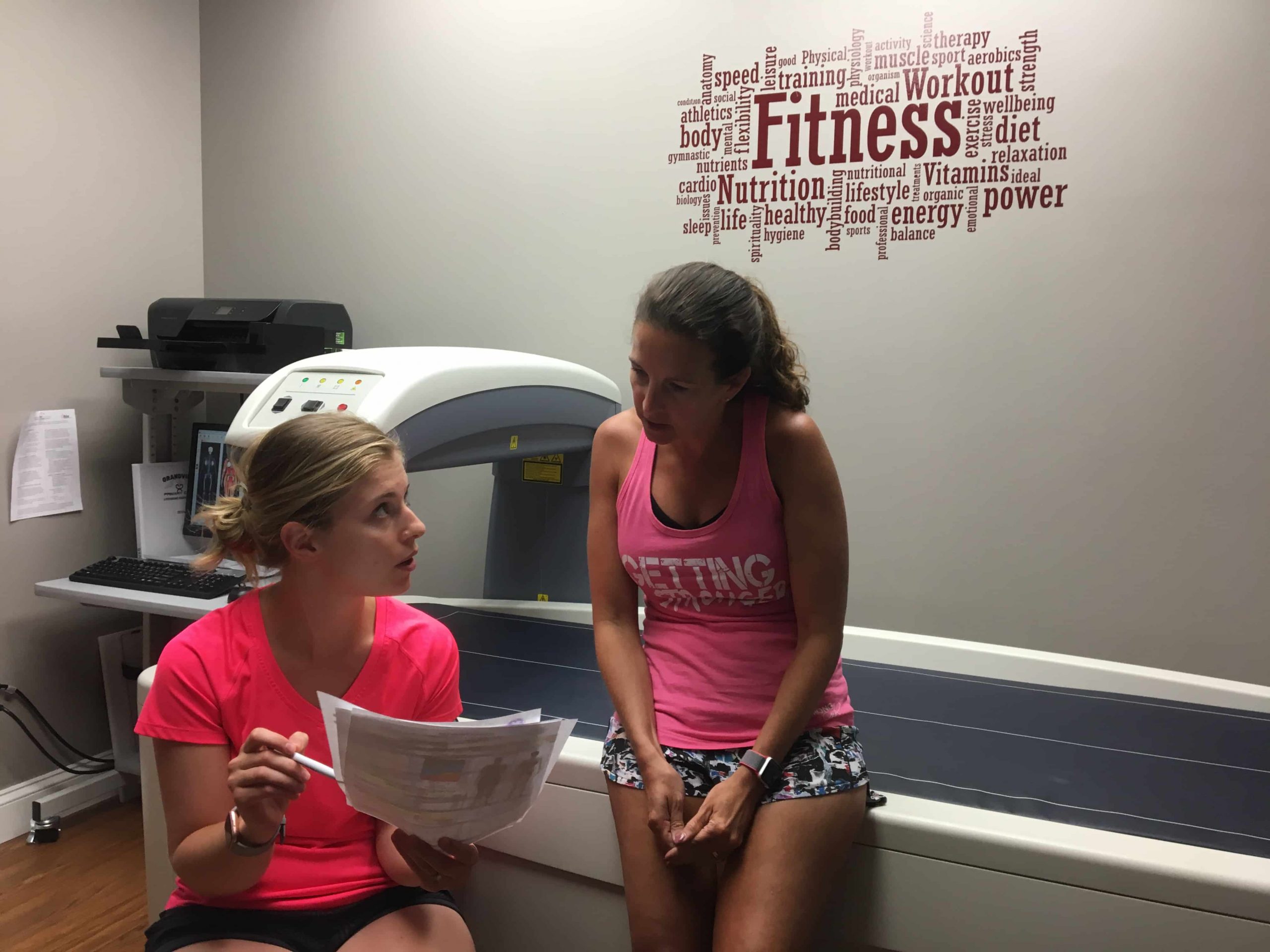
Before beginning an exercise regime, a pre-exercise assessment may be warranted and can help guide a professional in prescribing appropriate types and/or levels of exercise. A comprehensive physical activity assessment should address a range of factors, including clinical evaluations (weight, blood pressure, history of anemia, etc.), baseline activity level, barriers to physical activity (including environmental, financial, physical, time, social support, stress, etc.), and assessment of treatable contributing factors such as pain, fatigue, medications, nutritional deficits, and more.
Where to Start
For those that are new to exercise, knowing where to start can be intimidating! It is important to consider the types of movement you enjoy, and to gradually increase the duration and intensity.
- Exercise ‘Snacks’
- These include incorporating a five-minute walk during the day, building up to longer 20-30-minute walks, or multiple short bouts of exercise.
- Mix it up
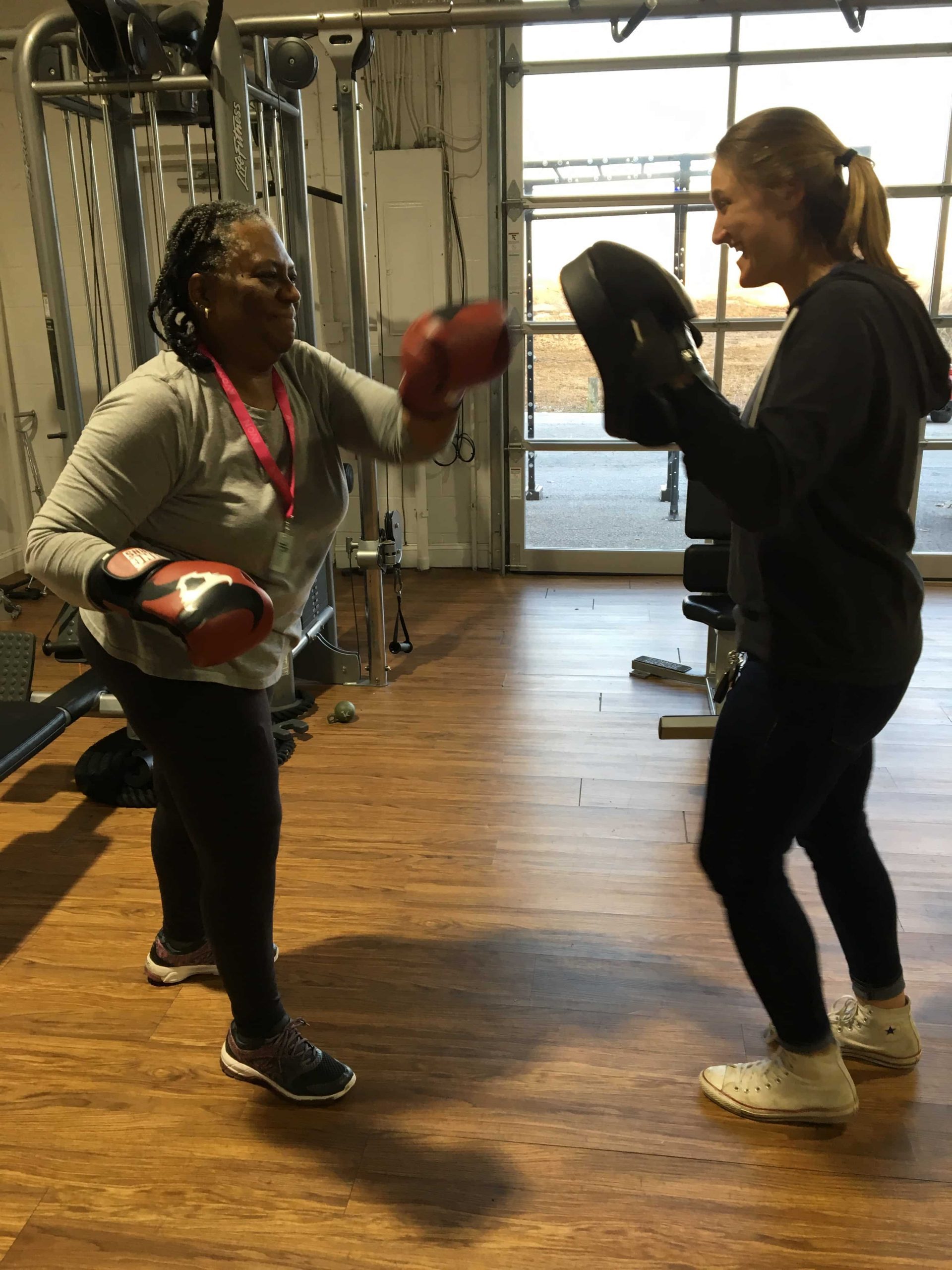
- Exercise can include a wide variety of activities, from dancing to yard work, and can even begin while sitting in a chair, moving your arms and legs to increase your breathing and heart rate.
- Social Support
- Incorporating family or friends into an exercise routine can also make it more enjoyable, helping you both include movement into your day.
Is exercise safe during treatment?
While any movement is generally beneficial, individuals undergoing or recovering from cancer treatment should consult with a physician to address treatment-related concerns, and personal health limitations.
The table below includes common exercise considerations specific to those undergoing treatment.
| Condition | Exercise Conciderations |
| Cardiac Conditions | Some cancer therapies increase cardiac risk. A medical assessment is recommended before starting exercise. Use the talk test* or RPE* instead of heart rate zones to gauge intensity. |
| Bone Health | Bone metastases and treatment-related bone loss increase fracture risk. Start with low-intensity and low-impact exercise, such as walking or swimming. Avoid exercises that increase muscle mass near affected bones. |
| Immunosuppression | Increased infection risk due to some treatment types, including chemotherapy, immunotherapy, and certain radiation therapies. Prioritize home-based or uncrowded environments for exercise. |
| Fatigue | Cancer-related fatigue can hinder activity, but aerobic exercise helps reduce fatigue. Begin with short, frequent bouts of movement |
| Neuropathy | Certain treatments can cause neuropathy, creating numbness, weakness, tingling, pain, and/or balance issues. Thus, effects on grip, gait, and balance should be taken into consideration. Machine-based exercises are recommended before advancing to free weights
Examples: a seated leg press instead of free-weight squats can help maintain lower-body strength without compromising balance. Machine based à cable machines à free weights Consult an exercise professional for advanced progression. |
| Lymphedema | Lymph node removal and certain radiation therapies can increase risk for lymphedema, a buildup of lymph fluid in body tissue. Lymphedema is most common for breast, gynecologic, head & neck, and skin cancers, and can cause swelling in both upper and lower extremities. Exercise is generally safe. Start with low intensity, low-volume and progress slowly as tolerated, especially for upper extremity lymphedema. |
| * Talk Test: Light intensity: "I can sing"; Moderate intensity: "I can talk, but I can't sing"; Vigorous intensity: "I can't say more than a few words"**RPE: Rate of perceived exertion is a subjective way to measure intensity; Light intensity: RPE 1-2; Moderate intensity: RPE 4-6; Vigorous intensity: RPE 7-10 |
|
ACSM’s Exercise Recommendations for Cancer Survivors
ACSM has developed exercise guidelines based on the ‘FITT’ principle, outlining recommendations for Frequency, Intensity, Time, and Type of exercise. In addition to guidelines for other chronic disease populations, ACSM has a set of FITT recommendations for individuals with cancer. These guidelines, from the ACSM, are outlined below, organized by aerobic, resistance, and flexibility exercise.
| Modality | Frequecy | Intensity | Time | Type |
| Aerobic | 3-5 days/week | 40–60% of VO2 Reserve or Heart Rate Reserve, or RPE 3–4 on a 10 point scale (moderate to somewhat hard effort) | ≥30 minutes/day (adjustable based on treatment side effects) | Walking, cycling, swimming (if no central lines/ostomies and not immunocompromised or receiving radiation) |
| Resistance | 2-3 days/week (with at least 2 days between sessions) | 60–80% of 1-Rep Max, or enough to maintain good form for 8–12 reps (RPE 4-6 on a 10 point scale) | ≥1 set of ≥8 reps, with ≥60 seconds rest between sets | 8–10 exercises targeting major muscle groups using free weights, machines, or both |
| Flexibility | 2-3 up to 7 days/week | Stretching within limits of pain or to point of discomfort | Hold static stretches for 10–30 seconds | Static stretches for major muscle groups; tai chi or yoga |
| Special Considerations: Many of the special considerations outlined above for those in cancer treatment (i.e. cardiac toxicity, bone health, immunosuppression, fatigue, neuropathy, and lymphedema) may also be applicable to those who have completed treatment. | ||||
| VO2 Reserve: The difference between maximum oxygen uptake (V02 max) and resting oxygen uptake. It is used to indicate relative intensity, with 0% indicating a resting state and 100% indicating a maximal effort.
Heart Rate: A measurement of relative intensity, describing the difference between maximum heartrate and resting heartrate. 1-Rep Max: maximum weight that can be lifted for a single repetition with good form. Talk Test: Light intensity: "I can sing" ; Moderate intensity: "I can talk, but I can't sing"; RPE: Rate of perceived exertion is a subjective way to measure intensity; Light intensity: RPE 1-2; Moderate intensity: RPE 4-6; Vigorous intensity: RPE 7-10 |
||||
Resources to Help Get You Started
Moving Through Cancer is a dedicated website that the American College of Sports Medicine (ACSM) has developed to encourage safe exercise for those with cancer. There you will find:
- Complete a brief survey to determine your exercise needs;
- Identify local support programs that align with the survey results with the Exercise Program Directory;
- Access to a free information booklet with tips on how to get started.
Conclusion
While the ACSM guidelines can be helpful goals to keep in mind, it is important to consult with an exercise professional, progress slowly, and acknowledge any limiting symptoms or side effects of cancer treatment. Ultimately, exercise can be an important part of both cancer treatment and post-treatment recovery, with evidence showing better tolerance to cancer treatment, mitigating side effects, reducing risk of reoccurrence and supporting return to activities that mean the most to the patient.
Resources
American College of Sports Medicine, Liguori, G., Feito, Y., Fountaine, C. J., & Roy, B. (Eds.). (2022). ACSM’s guidelines for exercise testing and prescription (Eleventh edition). Wolters Kluwer.
American College of Sports Medicine, Ozemek, C., Bonikowske, A. R., Christle, J. W., & Gallo, P. M. (Eds.). (2026). ACSM’s guidelines for exercise testing and prescription (Twelfth edition). Wolters Kluwer.
Cao, C., Friedenreich, C. M., & Yang, L. (2022). Association of Daily Sitting Time and Leisure-Time Physical Activity With Survival Among US Cancer Survivors. JAMA Oncology, 8(3), 395–403. https://doi.org/10.1001/jamaoncol.2021.6590
Campbell, K. L., Winters-Stone, K., Wiskemann, J., May, A. M., Schwartz, A. L., Courneya, K. S., Zucker, D., Matthews, C., Ligibel, J., Gerber, L., Morris, S., Patel, A., Hue, T., Perna, F., & Schmitz, K. H. (2019). Exercise Guidelines for Cancer Survivors: Consensus statement from International Multidisciplinary Roundtable. Medicine and Science in Sports and Exercise, 51(11), 2375–2390. https://doi.org/10.1249/MSS.0000000000002116
Cancer Statistics—NCI (nciglobal,ncienterprise). (2015, April 2). [cgvArticle]. https://www.cancer.gov/about-cancer/understanding/statistics
Clifford, B. K., Mizrahi, D., Sandler, C. X., Barry, B. K., Simar, D., Wakefield, C. E., & Goldstein, D. (2018). Barriers and facilitators of exercise experienced by cancer survivors: A mixed methods systematic review. Supportive Care in Cancer, 26(3), 685–700. https://doi.org/10.1007/s00520-017-3964-5
Cormie, P., Zopf, E. M., Zhang, X., & Schmitz, K. H. (2017). The Impact of Exercise on Cancer Mortality, Recurrence, and Treatment-Related Adverse Effects. Epidemiologic Reviews, 39(1), 71–92. https://doi.org/10.1093/epirev/mxx007
Kinser, C. (2019, November 26). Physical Activity Guidelines for Cancer. ACSM. https://acsm.org/physical-activity-guidelines-cancer-infographic/
McMillan, E. M., & Newhouse, I. J. (2011). Exercise is an effective treatment modality for reducing cancer-related fatigue and improving physical capacity in cancer patients and survivors: A meta-analysis. Applied Physiology, Nutrition, and Metabolism = Physiologie Appliquee, Nutrition Et Metabolisme, 36(6), 892–903. https://doi.org/10.1139/h11-082
Moving Through Cancer: Exercise for people living with and beyond cancer. (n.d.). Exercise Is Medicine. https://www.exerciseismedicine.org/wp-content/uploads/2021/04/Consolidated-Infographic-for-the-ACSM-Roundtable-on-Cancer-and-Exercise.pdf
Schmitz, K. H., Courneya, K. S., Matthews, C., Demark-Wahnefried, W., Galvão, D. A., Pinto, B. M., Irwin, M. L., Wolin, K. Y., Segal, R. J., Lucia, A., Schneider, C. M., von Gruenigen, V. E., Schwartz, A. L., & American College of Sports Medicine. (2010). American College of Sports Medicine roundtable on exercise guidelines for cancer survivors. Medicine and Science in Sports and Exercise, 42(7), 1409–1426. https://doi.org/10.1249/MSS.0b013e3181e0c112
Thraen-Borowski, K. M., Gennuso, K. P., & Cadmus-Bertram, L. (2017). Accelerometer-derived physical activity and sedentary time by cancer type in the United States. PloS One, 12(8), e0182554. https://doi.org/10.1371/journal.pone.0182554
The information in this document is for educational purposes only. The recommendations contained are based on the best available knowledge at the time of publication. Any reference to commercial products, trade or brand names is for information only, and no endorsement or approval is intended. UConn Extension does not guarantee or warrant the standard of any product referenced or imply approval of the product to the exclusion of others which also may be available. The University of Connecticut, UConn Extension, College of Agriculture, Health and Natural Resources is an equal opportunity program provider and employer.