Stink Bugs
Author: Pamela Cooper
Pamela.cooper@uconn.edu
Reviewer: Lauren Kurtz, UConn Extension
Publication EXT197 | March 2026
Introduction
Stink bugs (Pentatomidae) are shield-shaped true bugs, distinguished by a large, triangular scutellum that covers the abdomen between the folded wings. There may be two to three overlapping generations in a year. They can be damaging to crops and fruits if they occur in large numbers and can be difficult to control. Mouthparts are piercing and sucking. Some stink bugs are predatory and feed on other insects or arthropods, but not on plants.
Life Cycle
Stink bugs overwinter as adults under leaf litter and emerge in spring as grapes begin leafing out. The barrel-like eggs are laid in rafts, or groups, of sometimes 30 or more. Newly hatched nymphs hang out together over the eggshells and disperse after a day or more. Feeding of both nymphs and adults can cause damage to surfaces of developing fruits, and deformities such as cat-facing to larger fruits like apples and peaches.
Host Plants
Stink bugs feed on a wide variety of plants, including fruits, vegetables, woody ornamentals, and herbaceous plants. Some, like the Mormidea, also feed on the developing seeds of many plants, including grasses.
Damage to Plants
Stink bug damage is caused by the piercing and sucking of plant tissue and can result in yellowing or stippled leaves, fruits that are deformed with dimples, or cat-facing (deformed development) of fruits. Fruits can be undersized, shriveled or become pithy, and reduced yields in vegetable and fruit crops can result if populations of stink bugs are high.
Control
Hand-picking is a good option when practical. After removal, crush them or put in a bucket of soapy water.
Because they are piercing-sucking feeders, foliage and other plant surfaces sprayed with a control product are not very effective, as they will punch past the plant tissue and product, and not ingest it. Contact products are effective only if applied directly to the insect’s body.
A proper systemic product will have better results, as it would translocate throughout plant tissues and be ingested by the insect after feeding on the plant.
Row covers over vegetable and fruit crops are recommended, after flowers have been pollinated and fruit has been set. Scout for eggs on plants and crush when identified correctly.
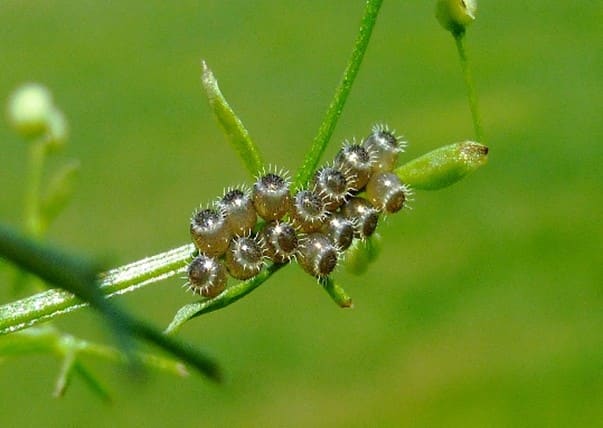
Eggs are laid in groups (rafts) of up to thirty and look like upright miniature barrels. Predatory stink bug eggs of the spined soldier bug have filaments edging the top outer edge. Do not crush these eggs if pest insects are on the plant.
Brown marmorated stink bugs (Fig 1) are an invasive pest that can cause severe damage to fruit crops and other plants if their populations are high. They will also try to enter homes as the weather gets cold in the fall. Native stink bugs will overwinter outdoors. They are easily identified by the white band on the antennae
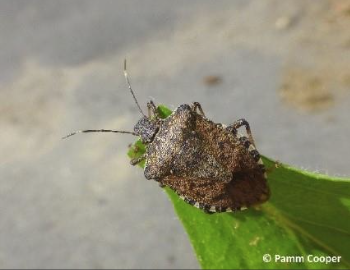
Common Stink Bugs of Connecticut
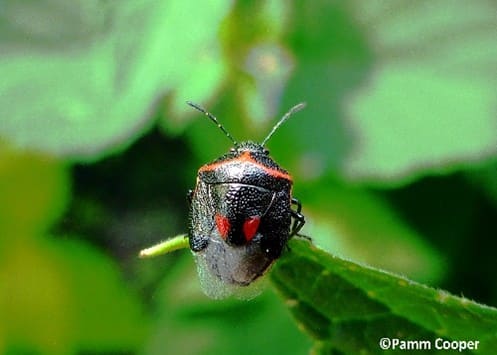
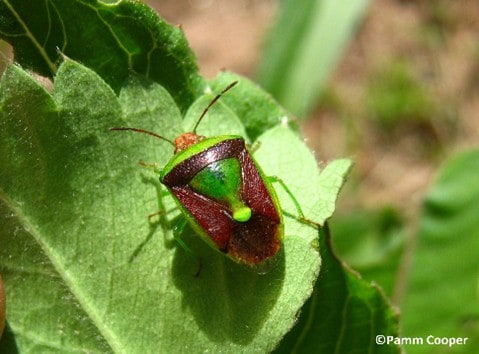
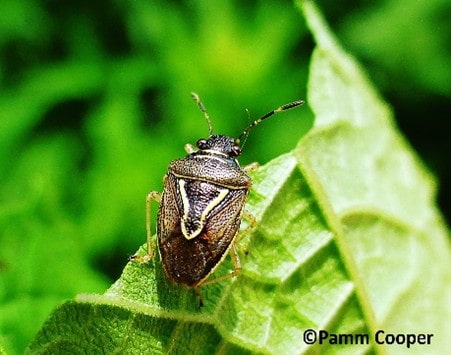
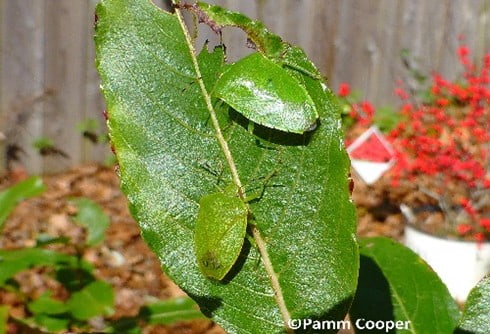
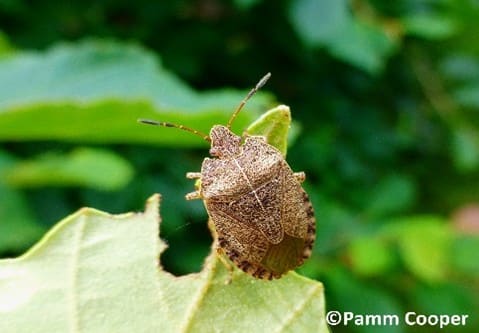
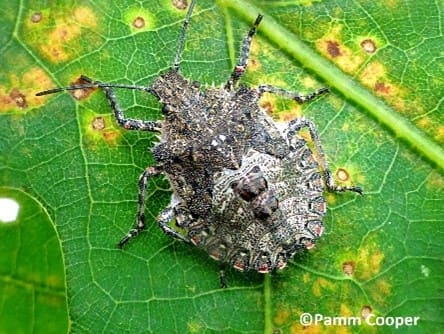
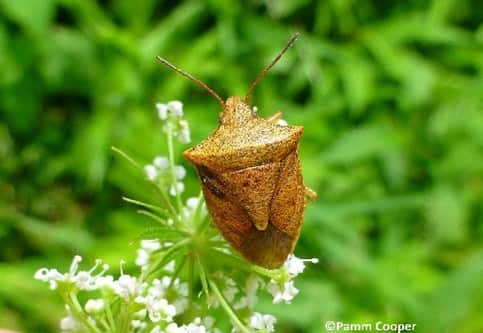

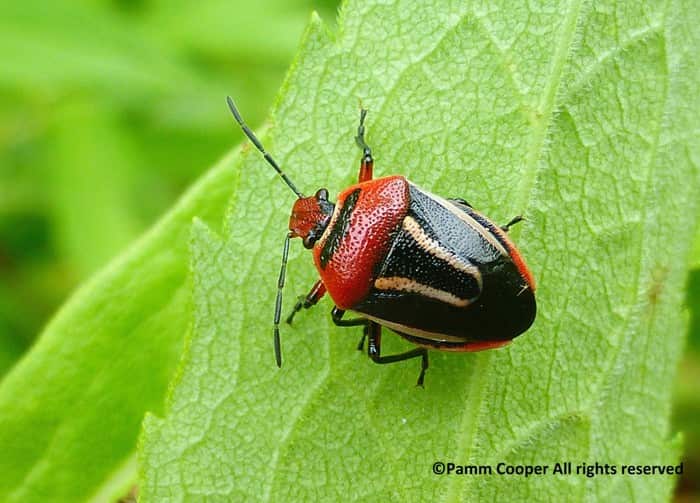
There are several species of stink bugs that are predatory, but can be considered beneficial when they attack pest insects. These include Podisus spp., Brochymena spp. and Perillus spp. Some are generalists, and as such they will also find non-pest insects as suitable prey. Eggs of the Podisus maculiventris predatory stink bug (Fig 2) have distinctive spines around the top edge.
The information in this document is for educational purposes only. The recommendations contained are based on the best available knowledge at the time of publication. Any reference to commercial products, trade or brand names is for information only, and no endorsement or approval is intended. UConn Extension does not guarantee or warrant the standard of any product referenced or imply approval of the product to the exclusion of others which also may be available. The University of Connecticut, UConn Extension, College of Agriculture, Health and Natural Resources is an equal opportunity program provider and employer.