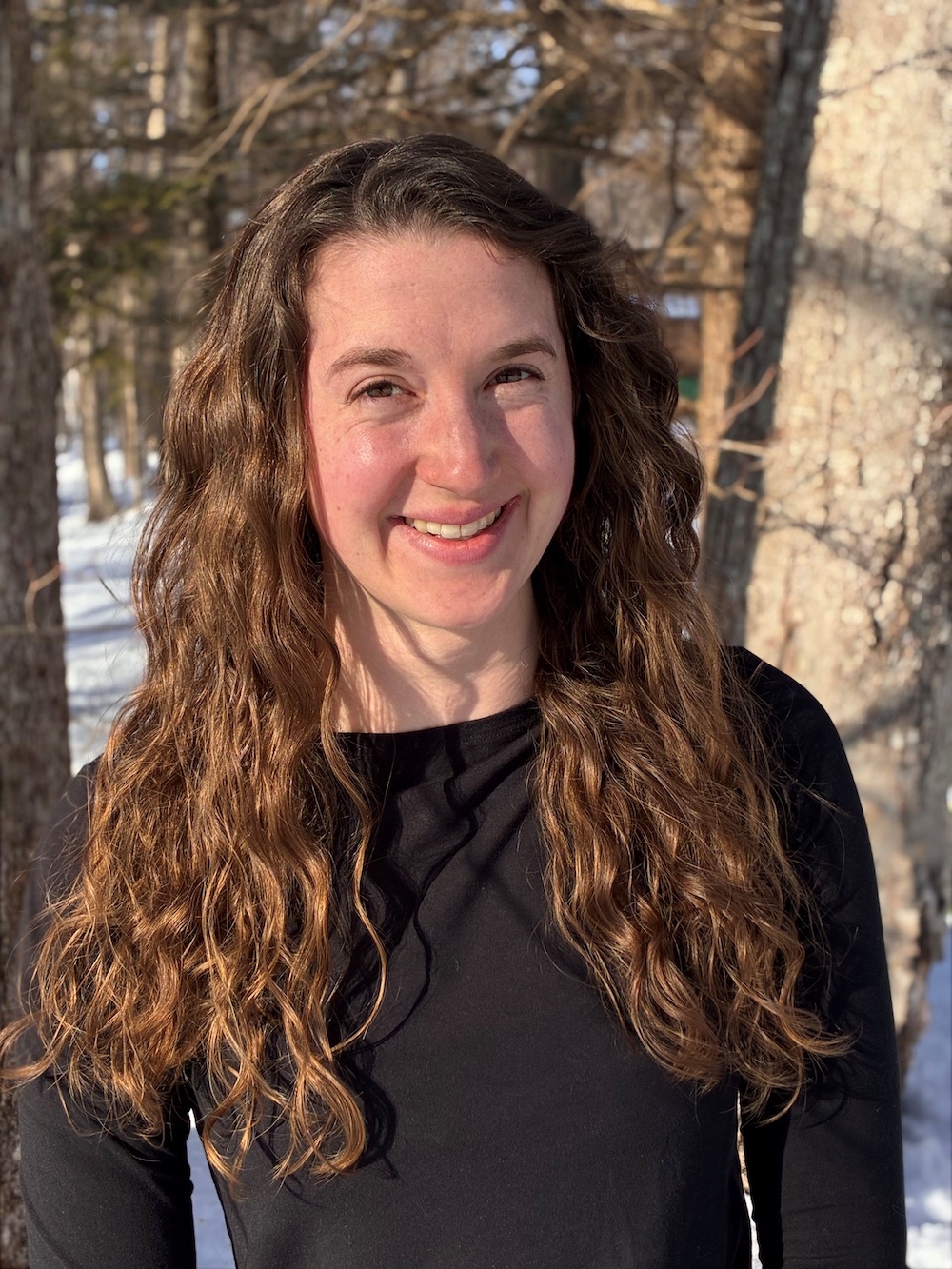
 Mari Cullerton recently joined our team as a research assistant in the Center for Land use Education and Research (CLEAR). She’s originally from Canaan, Connecticut and earned her bachelor of science in natural resources and environmental sciences from UConn, as well as her master of science, where she focused on remote sensing and GIS.
What is your area of interest and how did you get started with it?
I have many areas of interest at this point, but what seems to connect many of them are maps and locations, so I have become very interested in Geographic Information Services (GIS) and remote sensing. I never thought I would go down the path of geospatial analytics, but I took a couple classes during my undergrad and was hooked! I enjoy being able to map and see systems on large scales, and GIS/remote sensing is applicable to almost any field (which has allowed me to do a lot of exploring) from forest ecology and solar energy development to marine conservation and fisheries enforcement.
What is your role with UConn Extension?
My role with UConn Extension is with the UConn Center for Land use Education and Research (CLEAR) and UConn Extension’s Geospatial team. I hope to bring my geospatial and natural resource background to support a number of projects that involve land use, water, disaster preparedness, and more. The projects all involve mapping and sharing geospatial data and information in different ways and distributing this information (https://maps.cteco.uconn.edu/).
What excites you the most about working with UConn Extension?
I am excited to connect research-based knowledge to people and communities who are interested in using it to solve real world problems. Extension offices play a valuable role in bridging research institutions with the general public, and I am excited to be part of this dedicated community!
What is one thing you hope people will learn from you and your work?
I hope to help people understand the pervasiveness and utility of GIS and how it can be used in everyday life. GIS can sound very technical and scary, but it is all around us every day and can help us solve problems if we know where to look!
What is the most unusual job you’ve had?
Most unusual job – this definitely depends on who you ask. Offhand I can think of a couple from my time as an undergraduate worker, but I think the one that takes the cake was some field work in a water quality lab. Equipped with a laser thermometer, I helped collect Canada goose dropping for a project that looked to identify water contamination sources, specifically coliform bacteria. The samples had to be fresh… but not to worry, we used the thermometer for that. Close second was another undergrad field job packing car batteries through the woods to energize field sites. As unusual as it may sound, we had a blast!
What are some of your hobbies and other interests?
One of my hobbies is sugaring (the process to make maple syrup). But I enjoy most things outdoors.