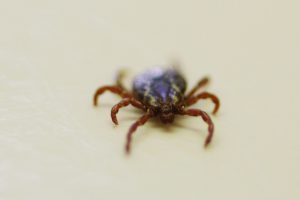
 The Connecticut Veterinary Medical Diagnostic Laboratory (CVMDL) is encouraging residents, veterinarians, livestock owners, and pet owners to submit ticks for testing to better understand the health risks associated with tick bites and help monitor tick-borne diseases in Connecticut.
Tick testing provides important information about the species of tick involved and whether it is carrying disease-causing pathogens. Knowing which pathogens may be present can help inform discussions with healthcare providers and veterinarians, increase awareness of potential symptoms to watch for, and contribute to statewide surveillance efforts that track emerging tick-borne health threats.
Recent testing conducted by CVMDL demonstrates why this information is valuable. In 2025, the laboratory analyzed 391 ticks submitted from across the region, representing several common species, including deer ticks, dog ticks, and lone star ticks. The laboratory also identified five invasive Asian longhorned ticks (Haemaphysalis longicornis), a species of growing concern due to its ability to reproduce rapidly, feed on a wide range of hosts, and expand into new areas.
Among the deer ticks tested, approximately 25% were positive for Borrelia burgdorferi, the bacterium that causes Lyme disease. Thirteen deer ticks carried more than one pathogen, highlighting the possibility that a single tick bite may expose people or animals to multiple diseases. Testing also detected Ehrlichia species in dog ticks and Borrelia lonestari in lone star ticks.
These findings illustrate that disease-causing pathogens can be present across multiple tick species and reinforce the importance of taking tick bites seriously. Testing submitted ticks helps researchers and diagnosticians identify trends in pathogen prevalence, track changes in tick distribution, and monitor the emergence of invasive species and new disease risks.
As Connecticut’s accredited veterinary diagnostic laboratory, CVMDL provides scientifically validated testing and expert identification of submitted ticks. Data generated through the laboratory’s testing program supports both individual clients seeking information about a tick encounter and broader public health and animal health surveillance efforts across the state.
To reduce the risk of tick-borne diseases, CVMDL recommends:
- Using EPA-registered tick repellents when spending time outdoors
- Performing thorough tick checks after outdoor activities
- Wearing protective clothing in wooded and grassy areas
- Promptly and properly removing attached ticks
- Maintaining tick prevention programs for pets and livestock
- Considering tick testing when a tick is found on a person, pet, or animal
By submitting ticks for testing, Connecticut residents can gain valuable information about potential disease exposure while helping scientists better understand the changing landscape of tick-borne diseases in the state.
For information about tick testing services, submission guidelines, and educational resources, visit https://cvmdl.uconn.edu/.