By Sandi Wilson, Fairfield County Master Gardener Coordinator
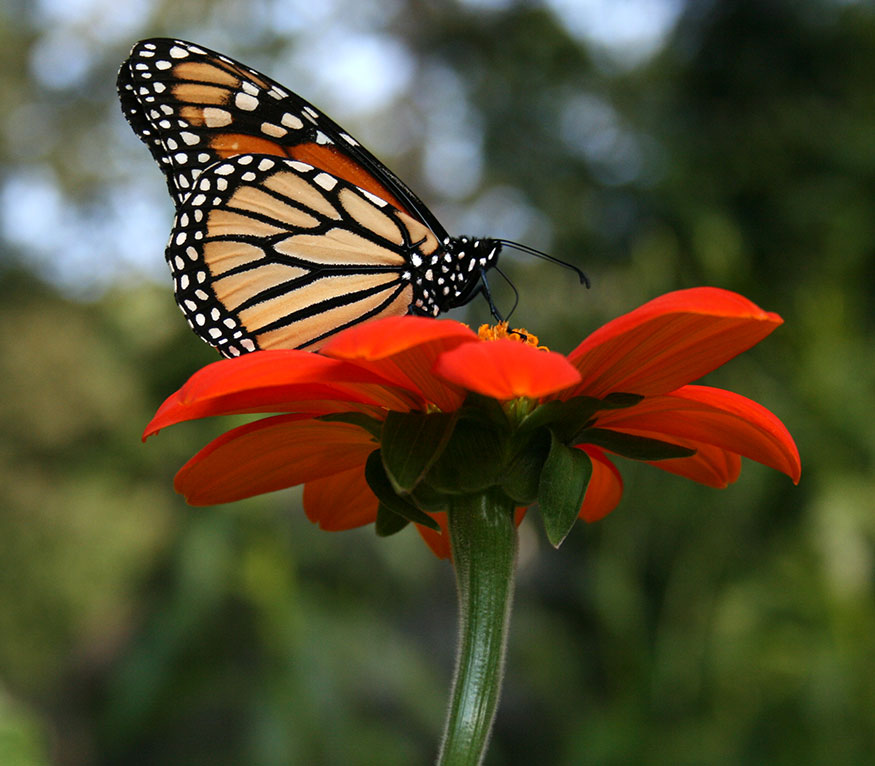 All across Fairfield County, UConn Master Gardeners are buzzing about the importance of pollinators and the need to protect and encourage them in our backyards and beyond. From giving talks on the importance of native pollinators at schools and libraries, designing and installing pollinator gardens, and encouraging homeowners to become part of the Pollinator Pathway, Master Gardeners are leading the way.
Current research at UConn and other universities along with other scientific organizations has shown that insects, one of our most important pollinators, are declining at an alarming rate. Loss of habitat, pesticide use, invasive plant species, and climate change are some of the factors being attributed to the decline. As a result, plants and animals such as birds that rely on insects are also being adversely affected. While many of us have heard about the importance of the non-native honeybee, it is important to remember that native bees pollinate 80% of the world’s crops. Our backyard tomatoes, squash, and blueberries, as well as most of our ornamental plants are pollinated by native bees and many of them are specialists that native plants count on for reproduction. These native bees are declining and are in serious need of our protection and conservation.
Master Gardeners are aware of this issue and are taking steps to remedy the situation. Many have started in their own backyards by slowly incorporating more native trees, shrubs, and perennials. Now they are busy promoting pollinator gardens across the county for libraries, garden clubs, and other organizations. It is not just adults that are hearing their message either. Master Gardeners realize how important it is to educate young people about the importance of native plants and protecting pollinators and our environment. Master Gardener Deb DiCiccio has taken this mission seriously in her work with children at Cranberry Elementary in Norwalk. Working with the Science Department and the children at the school, they built a pollinator garden and outdoor classroom where the children can see firsthand the native plants and pollinators that visit them. Master Gardener Anne Mead shared the message with 3-5- year-old students at Danbury School Readiness Preschool Program where she described “what a pollinator plant is, how pollination happens and why it is important to have pollinator gardens in urban areas.” Children love to learn about plants and pollinators and as Master Gardener Deb DiCiccio says, “There is no finer connection with nature then that moment when we “know” a child is having an “ah ha” moment.” And it is not just at schools where the children are being educated, Master Gardener Barbara Thomas recently worked with two girl scout troops on a large pollinator garden in Monroe’s Webb Mountain Discovery Zone. They developed a list of native plants to add to the garden and planted 60 new pollinator friendly native plants to encourage them.
Community service is required as part of their requirements for Master Gardener certification and many of the approved projects focus on environmental conservation such as removing invasive plant species which are crowding out and threatening our native plants species. As their community service project, many Master Gardeners have acted as consultants for non-profits that wished to plant native plant and pollinator friendly gardens. Last year, Fairfield County Master Gardeners collaborated with community partners and helped plan and install pollinator gardens in Brookfield at the Erikson Farm Open Space, and at the Danbury Public Library. Currently Master Gardeners are creating a native plant display area to enhance the Demonstration Vegetable Garden at the County Extension center in Bethel. The Demonstration Vegetable Garden, which donates its harvests to area food pantries, is open for visits on most Saturdays in the growing season during the Bethel Farmer’s Market.
Some of the Master Gardeners have become quite passionate about the importance of native plants and saving our pollinators. Many are involved with the Pollinator Pathway, a nationwide organization that started in Wilton, Connecticut. The goal is to create native plant strips where homeowners, parks, and businesses cultivate a link of pesticide free pathways for pollinators to counter the dead zones that have been created by the fragmentation of development. Members give free presentations to educate the public, help start up new pathways, and advocate for policies that protect pollinators.
Another group that advocates strongly for pollinators is Protect Our Pollinators. The organization gives free presentations, offers a newsletter and promotes pesticide free gardening. Co-founded by Master Gardener, Holly Kocet, the non-profit organization’s mission is to “save endangered pollinators by education and action.”
Like the buzzing action of bees on the flowers of a native plant, Master Gardeners continue to spread their educational mission by visiting many sites in Fairfield County to share their horticultural expertise, knowledge of native plants, and pollinator conservation message.
Visit our website to learn more about becoming a Master Gardener or obtain an application for the 2026 program.
For questions regarding native plants, pollinators, or general gardening questions, email us at FairfieldMasterGardeners@uconn.edu