PFAS and Microplastics: Understanding Everyday Chemical Exposure and Its Health Impacts

Authors: Alec Janis
alec.janis@uconn.edu

Reviewers: Jenn Cavallari, UConn School of Medicine

Publication EXT222 | August 2026

DOI # pending

Print This Fact Sheet

Introduction

An environmental contamination that is becoming increasingly difficult to ignore, (per- and polyfluoroalkyl substances (PFAS) and microplastics have emerged as two pollutants of major concern. These chemicals are being found in our air, water, soil, and even our food, as they slowly wear off the everyday products from which they came.

The same products that have made everyday life convenient and affordable, may also be causing harm to our bodies and our environment. This fact sheet is designed to help readers differentiate between PFAS and microplastics and understand how they could be affecting human health.

PFAS

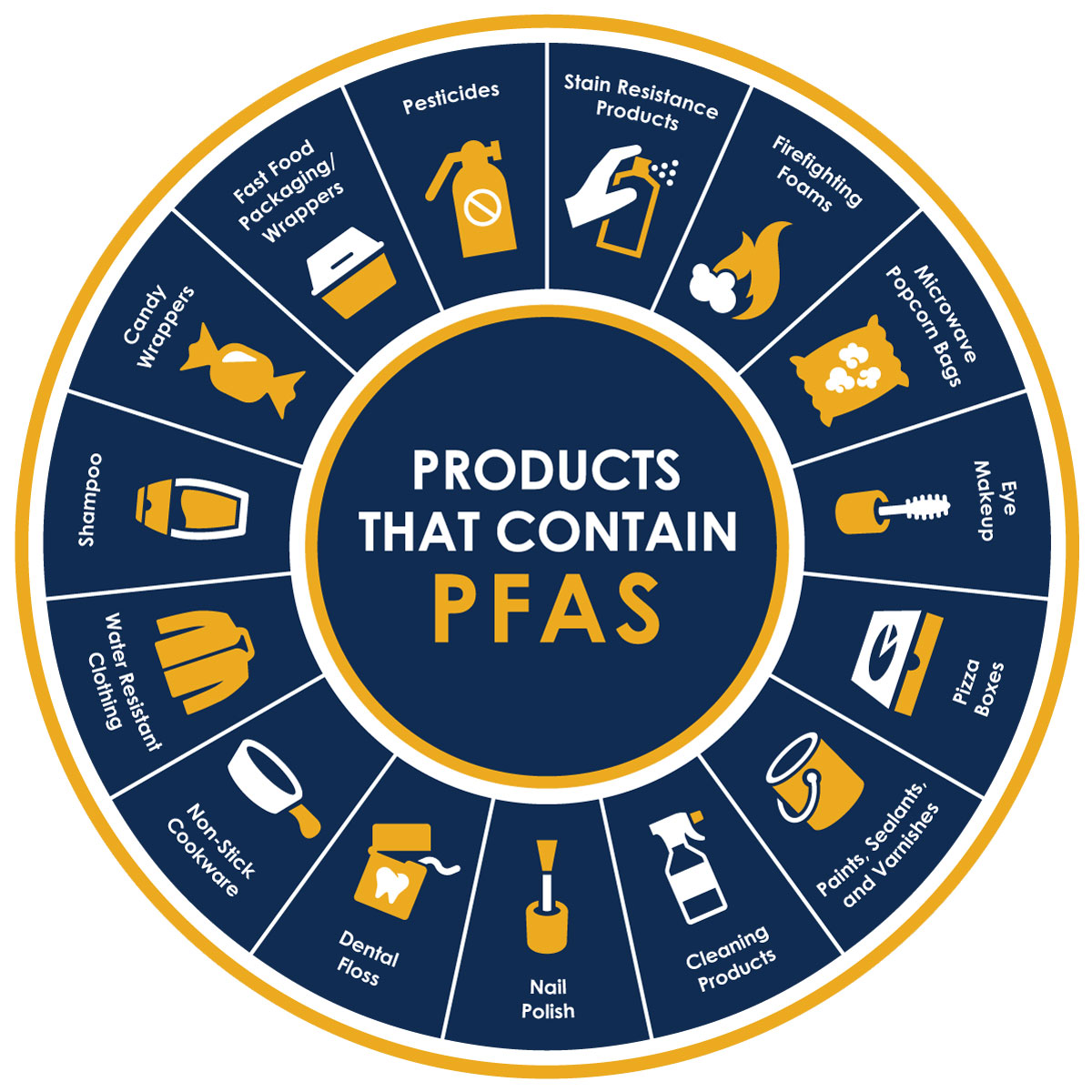
a visual circle showing a variety of everyday items that include PFAS.
Different products that contain PFAS. Graphic courtesy of the City of Riverside, California

Also known as ’forever chemicals’, PFAS are a family of industrial-made chemicals that coat many commercial and household products, to make them water, oil, and stick resistant. PFAS have been used in household products like carpets, cookware, aerosol cans, cosmetic products, food wrappers, paper products, and furniture, and more for over 80 years.

Due to their special chemical nature, PFAS will not break down naturally over time. They are not permanently bound to the products they are placed upon, inevitably leading them to shed into the natural environment. They have been found moving through rain, oceans, and groundwater, ending up in our soils, crops, and drinking water.

Once they have entered our bodies, their chemical structure resembles that of essential hormones, such as estrogen, or hormones that regulate the thyroid, causing them to disrupt important bodily functions. They have been found to cause thyroid complications, testicular and kidney cancer, developmental complications, chronic inflammation, and immune system impairment.

Plastics and Microplastics

Plastics are used all around the world, to make everyday items like household containers, paints, car tires, and cosmetic products. But over time, whether exposed to sunlight, salt water, or other environmental factors, large plastics begin to break down into smaller pieces. These fragments, along with plastics manufactured to be incredibly small, have eventually found their way into our air, food, and drinking water.

Plastics is a very large category; the feel and durability of plastic wrap is very different than that of a plastic cutting board, yet they are still both plastics. When plastics are manufactured, there are many different chemicals that are added to increase the durability and flexibility of the end-product.

When ingested, depending on the added chemicals, plastics may cause immune dysfunction, altered metabolism, chronic inflammation, harm gut health, liver disfunction, reproductive issues, and carcinogenicity.
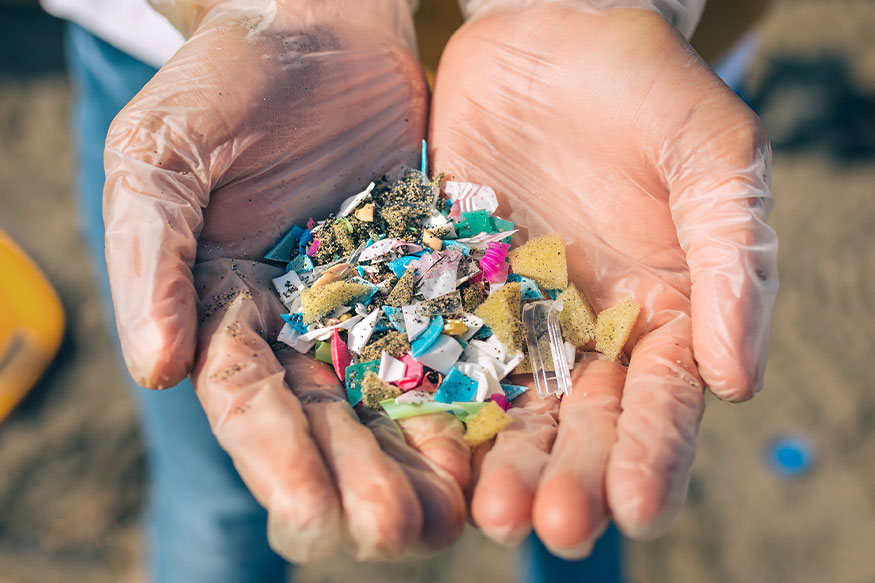
Plastics break down overtime, leaching microplastics into the environment.

Another plastic additive that has been discussed are BPAs or Bisphenol A. This additive makes plastics sturdy and heat resistant. Often products like reusable water bottles, are labeled as ‘BPA Free’, which can be misleading. These products may still contain similar chemicals that cause health complications, such as hormone disruption, and may affect reproductive health.

Conclusion

This factsheet is not meant to scare but to inform you about chemicals that we encounter every day. We live in an imperfect, convenience‑driven world, and eliminating all plastics or non-stick pans is neither realistic nor recommended. Even adopting one or two of these practices over time is a meaningful step in the right direction. These chemicals are not disappearing anytime soon, but small, practical changes can help reduce your exposure and support long‑term health.


Resources

Glüge, J., Scheringer, M., Cousins, I. T., Dewitt, J. C., Goldenman, G., Herzke, D., Lohmann, R., Ng, C. A., Trier, X., & Wang, Z. (2020). An overview of the uses of per- And polyfluoroalkyl substances (PFAS). Environmental Science: Processes and Impacts, 22(12), 2345–2373. https://doi.org/10.1039/d0em00291g

Levin, R., Villanueva, C. M., Beene, D., Cradock, A. L., Donat-Vargas, C., Lewis, J., Martinez-Morata, I., Minovi, D., Nigra, A. E., Olson, E. D., Schaider, L. A., Ward, M. H., & Deziel, N. C. (2024). US drinking water quality: exposure risk profiles for seven legacy and emerging contaminants. In Journal of Exposure Science and Environmental Epidemiology (Vol. 34, Issue 1, pp. 3–22). Springer Nature. https://doi.org/10.1038/s41370-023-00597-z

Moon, M. K. (2019). Concern about the safety of bisphenol a substitutes. In Diabetes and Metabolism Journal (Vol. 43, Issue 1, pp. 46–48). Korean Diabetes Association. https://doi.org/10.4093/dmj.2019.0027

Tang, K. H. D. (2025). Counteracting the Harms of Microplastics on Humans: An Overview from the Perspective of Exposure. In Microplastics (Vol. 4, Issue 3). Multidisciplinary Digital Publishing Institute (MDPI). https://doi.org/10.3390/microplastics4030047

Tang, K. H. D., Li, R., Li, Z., & Wang, D. (2024). Health risk of human exposure to microplastics: a review. In Environmental Chemistry Letters (Vol. 22, Issue 3, pp. 1155–1183). Springer Science and Business Media Deutschland GmbH. https://doi.org/10.1007/s10311-024-01727-1

United States Environmental Protection Agency. (2025). Identifying Drinking Water Filters Certified to Reduce PFAS. https://www.epa.gov/water-research/identifying-drinking-water-filters-certified-reduce-pfas

The information in this document is for educational purposes only. The recommendations contained are based on the best available knowledge at the time of publication. Any reference to commercial products, trade or brand names is for information only, and no endorsement or approval is intended. UConn Extension does not guarantee or warrant the standard of any product referenced or imply approval of the product to the exclusion of others which also may be available. The University of Connecticut, UConn Extension, College of Agriculture, Health and Natural Resources is an equal opportunity program provider and employer.