

Strengthening Food Security Across Connecticut
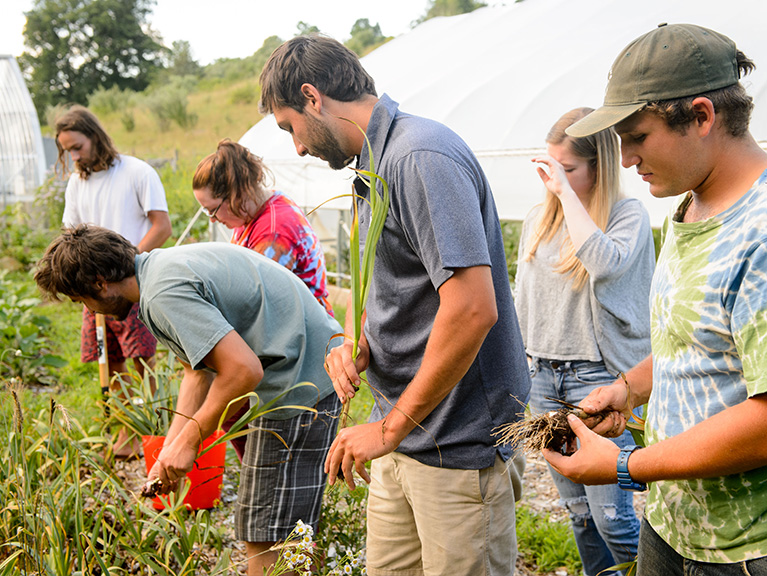 As food prices rise, more Connecticut residents are struggling to access healthy, affordable food. UConn Extension is addressing this challenge through a coordinated, statewide approach that strengthens local agriculture, expands food access, and delivers practical nutrition education.
Supporting local farmers is central to this work. Extension professionals help producers adopt weather-resilient practices, improve soil and plant health, and expand market opportunities so more Connecticut-grown food reaches local communities. Programs like Put Local on Your Tray, Grown ConNECTed, and Solid Ground connect farmers with schools, rebuild regional supply chains, and support new farmers in launching sustainable operations.
Extension also delivers hands-on nutrition education in schools, senior centers, and community spaces. Participants learn cooking skills, budgeting strategies, and ways to make healthier choices, leading to measurable improvements in diet and well-being.
Volunteers in the UConn Extension Master Gardener Program further expand this impact by supporting community and school gardens, answering home gardening questions, and promoting sustainable growing practices. These efforts increase access to fresh food while empowering residents to grow their own.
Together, these programs strengthen Connecticut’s food system, making it more resilient and locally rooted, while improving health outcomes and supporting the state’s agricultural economy.
Building Resilience Before the Storm
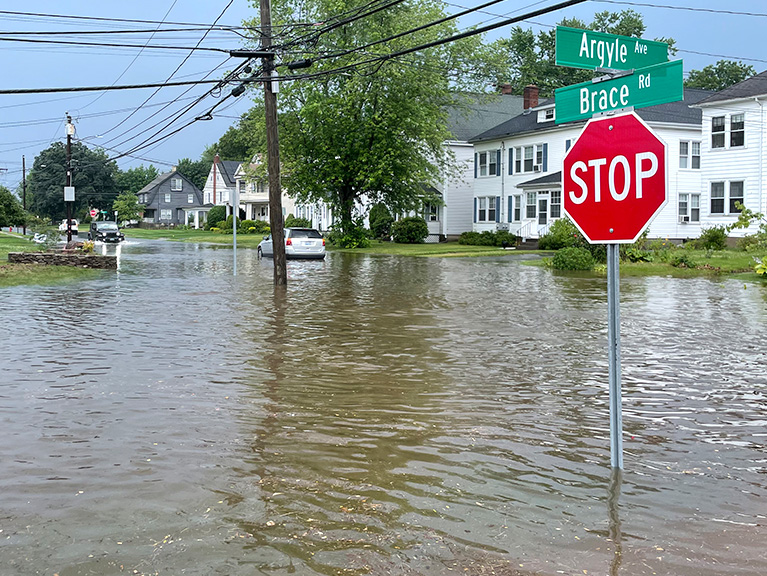 Extreme weather events, flooding, hurricanes, and severe winter storms, are becoming more frequent and more damaging. UConn Extension is helping Connecticut communities prepare through practical, research-based resources that support readiness, response, and recovery.
Through the Extension Disaster Education Network (EDEN), Extension recently released a new series of disaster preparedness fact sheets tailored to farms, families, and communities. These guides address real-world challenges, including managing flood risks, protecting gardens and livestock, and preparing for seasonal weather extremes. Step-by-step checklists make it easier to take action before the next storm.
These new tools build on Extension’s broader EDEN library, which includes emergency supply guidance, hurricane and flood preparedness resources, and planning tools for households, farms, and municipalities. Videos, checklists, and programs help users build resilience year-round.
At its core, this work reinforces a simple message: preparedness saves time, money, and lives. By translating research into accessible tools, UConn Extension helps reduce risk, protect livelihoods, and speed recovery after disasters.
From safeguarding crops and animals to helping families prepare emergency kits, Extension ensures Connecticut communities are better equipped to face whatever comes next.
UConn 4-H is Growing Tomorrow’s Leaders
 For more than a century, UConn 4-H has helped young people across Connecticut build confidence, leadership, and a sense of belonging. Today, the program reaches youth in 154 municipalities and engages more than 29,000 participants ages 5 to 19 each year. What sets 4-H apart is its hands-on, learn by doing approach. Youth explore interests ranging from agriculture and robotics to civic engagement, gardening, and the arts. Along the way, they develop critical thinking, resilience, teamwork, and problem-solving skills, guided by dedicated volunteers who create supportive environments where young people can succeed.
As part of the nation’s largest youth development network, 4-H connects participants to opportunities that inspire future career paths. Many discover interests in STEM, agriculture, and community leadership, fields they may not have otherwise explored. UConn 4-H continues to evolve to meet the needs of today’s youth while remaining steadfast in its core values of head, heart, hands, and health.
By investing in young people today, UConn Extension is helping develop the next generation of leaders, engaged, capable individuals who will strengthen their communities and shape Connecticut’s future.
UConn 4-H in Washington DC
 UConn 4-H members were recently in Washington, D.C. for Citizenship Washington Focus, where they engaged directly with policymakers and national thought leaders. Our youth met with Congressman Joe Courtney, an aide from Senator Richard Blumenthal’s office, and additional congressional staff, discussing the value of 4‑H programs in Connecticut communities. They also heard from special guest Robert Ballard, renowned ocean explorer and discoverer of the Titanic. This experience highlights the depth of UConn Extension’s youth leadership development and our ongoing efforts to build strong relationships with federal and state partners on behalf of Connecticut families and communities.
A second group of UConn 4-H members was also in Washington D.C. for the Ignite by 4-H event. Youth attended legislative visits, animal tours and created change action plans; helping them become Beyond Ready to take on the challenges facing our communities here in Connecticut.
Land Use Mapping Guides Connecticut’s Future
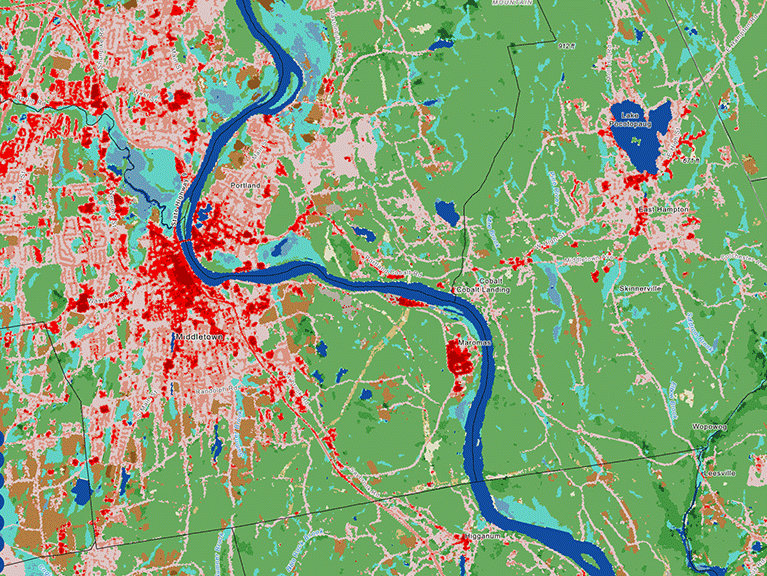 How land is used today shapes Connecticut’s future. Through an innovative land cover mapping project, UConn Extension is providing the data communities need to make informed decisions about growth, conservation, and resilience.
Developed by UConn Extension’s Center for Land Use Education and Research (CLEAR) in partnership with the Long Island Sound Partnership and the Connecticut Department of Energy and Environmental Protection, this interactive resource tracks how Connecticut’s landscape has changed over time. Using land cover created from satellite imagery and advanced mapping technology, the project documents almost 40 years of land cover change, from forests and farmland to developed areas, across the state and the entire Long Island Sound watershed.
The project provides interactive tools that allow users to explore change in their watershed, town, or state. Communities can see where development is increasing, and how changes to land may impact forest resources, water quality, flooding, habitat, and communities. For example, tracking changes in impervious surfaces like roads and buildings helps identify areas at greater risk for stormwater runoff and flooding and guides community resilience planning.
By making the maps and data accessible to planners, local officials, researchers, and residents, UConn Extension is helping inform land use decisions statewide. This project turns data into action, supporting healthier ecosystems, stronger communities, and a more secure future for Connecticut.
View all maps, tools and data on the CLEAR CT ECO website.
Connecticut Trail Finder

Connecticut Trail Finder is the state’s go-to resource for discovering trails, and it’s proudly led by UConn Extension in partnership with state agencies and outdoor organizations. The free website and mobile-friendly platform helps residents and visitors find places to walk, hike, bike, and explore, while highlighting accessibility, land stewardship, and local connections.
To encourage people to get outside and explore more of Connecticut, there is also a trail badge program. Users can earn digital badges by logging their trail visits and completing seasonal or thematic challenges. This spring, consider celebrating the warmer weather by exploring a few new trails and tracking your adventures with a free account at cttrailfinder.com. Badges are automatically added to your profile as you complete challenges.

Promoting White Oak
Celebrating the 250th Anniversary of the Declaration of Independence
 As Connecticut prepares to mark the 250th anniversary of the Declaration of Independence in 2026, UConn Extension is recognizing one of our state’s most enduring symbols, the white oak, through a multi-year education effort to grow, nurture and promote white oak in the landscape. White oaks have shaped Connecticut’s landscapes for centuries and hold deep ecological, cultural, and historical significance, including ties to Indigenous communities and the legacy of the famed Charter Oak, that protected the foundational document for our Connecticut Constitution in 1687 when England's King James II wanted to include Connecticut in the "Dominion of New England." During a debate, the Royal Charter was hidden inside a hollow oak tree in Hartford.
To celebrate this anniversary and strengthen Connecticut’s future forest canopy, UConn Extension’s Forestry Program launched the White Oak Heritage project, supported by the UConn Forest Crew, CT Humanities, and CT DEEP Forestry and Wildlife Divisions. The initiative focuses on fostering white oak populations across the state through partnerships with towns, conservation groups, woodland owners, and community organizations. A key milestone includes the collection of approximately 500 acorns from a documented descendant of the original Charter Oak. These acorns have been carefully planted and nurtured at UConn, with seedling distribution to communities anticipated this spring.
UConn Extension has also collected an additional 500 acorns from ancient, 250‑plus‑year‑old white oaks, further preserving the species’ genetic legacy. These efforts complement statewide education and engagement activities that highlight the importance of healthy forests, community stewardship, resilient landscapes, and acknowledging the people who care for the trees and steward the forest resource.
Together, these initiatives ensure that the iconic white oak, Connecticut’s state tree, continues to thrive for generations to come. UConn Extension is helping cultivate meaningful connections between people, place, and history while building the environmental future for all communities across our state.
You, too, can get involved! We are creating an interactive map showing locations of old, large, and special specimens of white oak across the state. Please tell us about the largest, or the oldest or most unique white oak tree in your community. Just visit the White Oak Legacy page and share your information.
Also, you can view the official trailer for “Still Standing,” the documentary we are producing about contributions of white oak to our great state, with Spanish or English subtitles.
Fueling Local Economies, One Entrepreneur at a Time
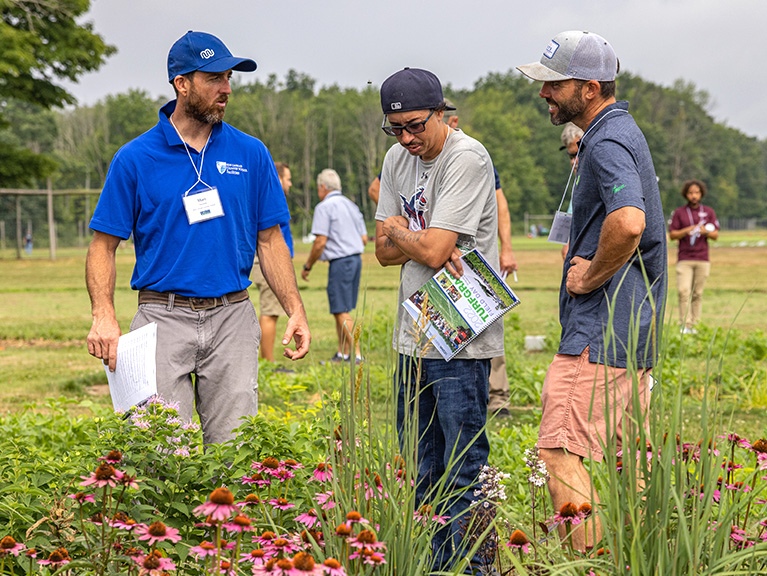 UConn Extension strengthens Connecticut’s local economies by equipping entrepreneurs, businesses, and community leaders with the tools they need to succeed. Through research-based training, workforce development, and technical assistance, Extension supports economic growth rooted in innovation and sustainability.
Each year, thousands of residents participate in Extension programs that prepare them for careers in agriculture, food systems, natural resources, and community development. Trainings in areas such as pesticide safety, food safety, greenhouse production, aquaculture, and land use provide practical, industry-specific skills that directly support business success.
Extension also supports entrepreneurs at every stage. Beginning farmers and food business owners gain guidance in business planning, regulatory compliance, and market development, helping them launch and grow sustainable operations. These efforts strengthen local supply chains and expand Connecticut’s food economy.
Youth development programs, including 4-H, further contribute by building career readiness and entrepreneurial skills in agriculture, STEM, and leadership. In addition, Extension provides technical expertise to municipalities and organizations, supporting land use planning, community development, and local economic strategies.
Together, these programs create stronger businesses, more skilled workers, and more vibrant communities, demonstrating how UConn Extension drives economic impact across the state.
Connecticut Native Plant Availability List
 Trees • Shrubs • Perennials

We recently updated the Connecticut Native Plant Availability List, and it is even more user-friendly. This native plant guide was created to assist municipalities, conservation organizations, homeowners, landscape architects, designers, and contractors with locating native plants for habitat restoration and wildlife enhancement.
The Connecticut Native Plant Availability List, by UConn Extension and the Connecticut Department of Energy and Environmental Protection Wildlife Division, identifies nurseries and garden centers that grow/sell native trees, shrubs, and perennials. Along with several nurseries that are new to the list, users can now view the Availability List sorted by Nursery.