Hosts
The spotted lanternfly (SLF) feeds on more than 60 genera of plants in North America. Its preferred host is the invasive tree of heaven (Ailanthus altissima). Host preference varies by life stage: nymphs are less selective, while adults prefer woody trees and vines. They use their piercing sucking mouthparts to feed on sugary sap. Nymphs feed on young, tender plant tissue, while adults feed on woody, more mature plant tissue. Both adults and nymphs feed on black walnut, butternut, maple, birch, sumac, willow, and other native trees. Agricultural crops affected in Connecticut include apples, grapes, peaches, plums, cherries, and apricots.
Description and Life Cycle
SLF is a late-season pest of New England crops. It produces one generation per year, undergoes incomplete metamorphosis, with an overwintering egg stage, four nymphal stages, and an adult stage (Figure 1).
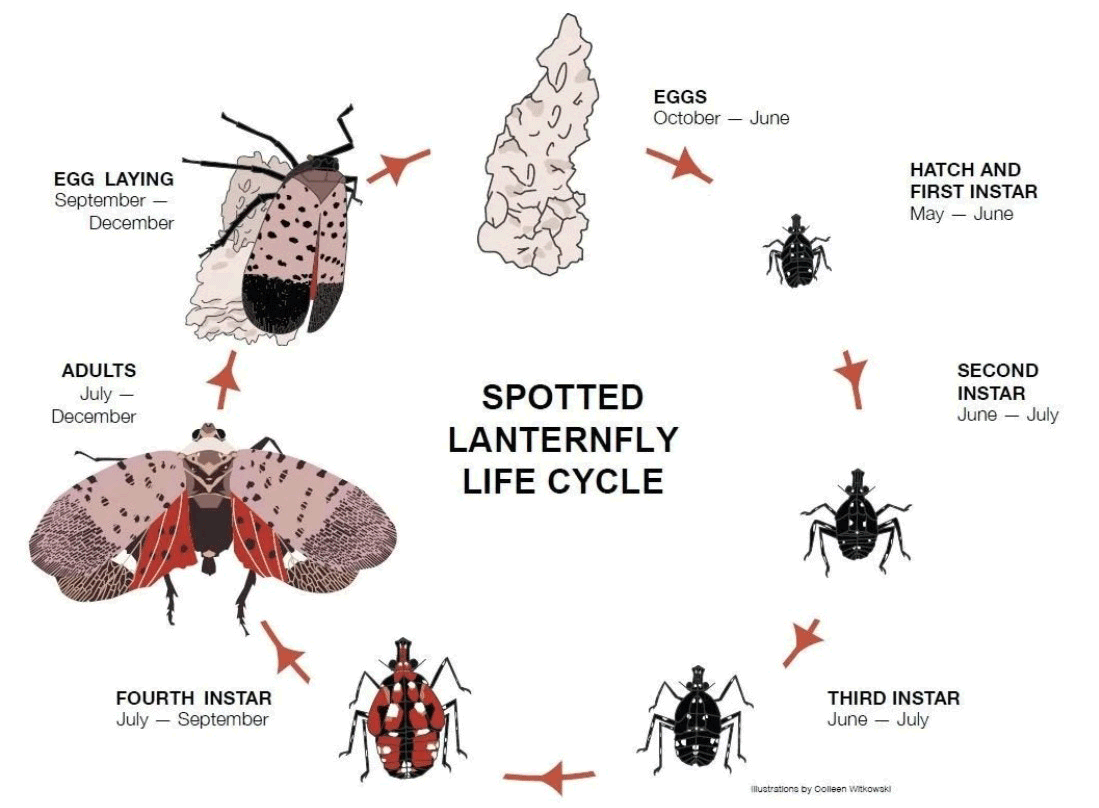
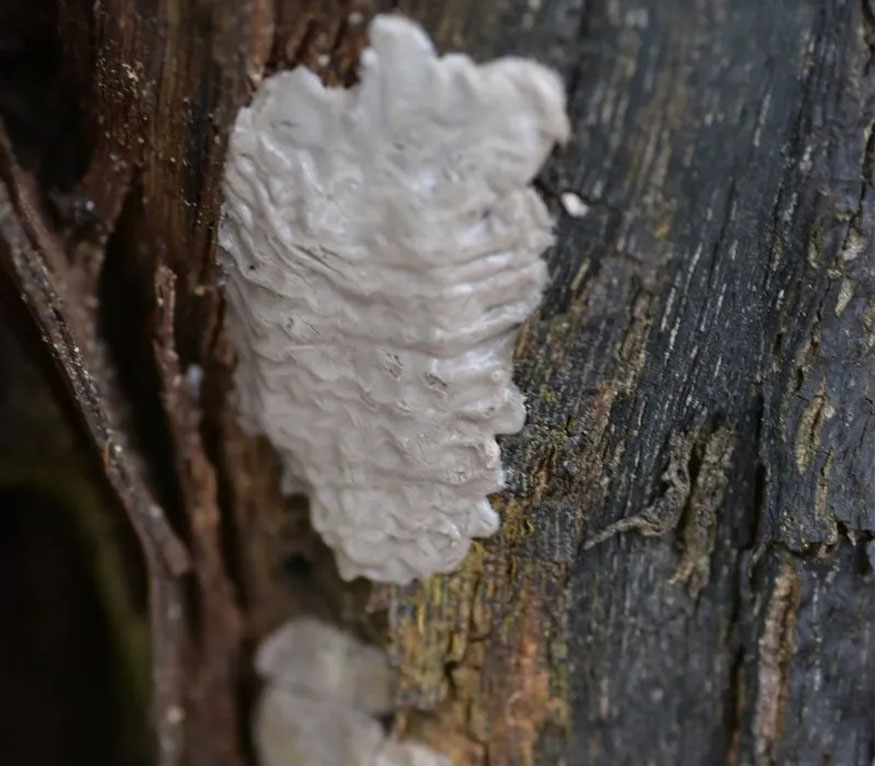
Females lay eggs in the fall, and the eggs overwinter. Egg masses are laid on many surfaces, including trees, bricks, stones, vehicles, and other outdoor objects. Eggs hatch in spring, but hatch timing and nymph development vary depending on local weather conditions.
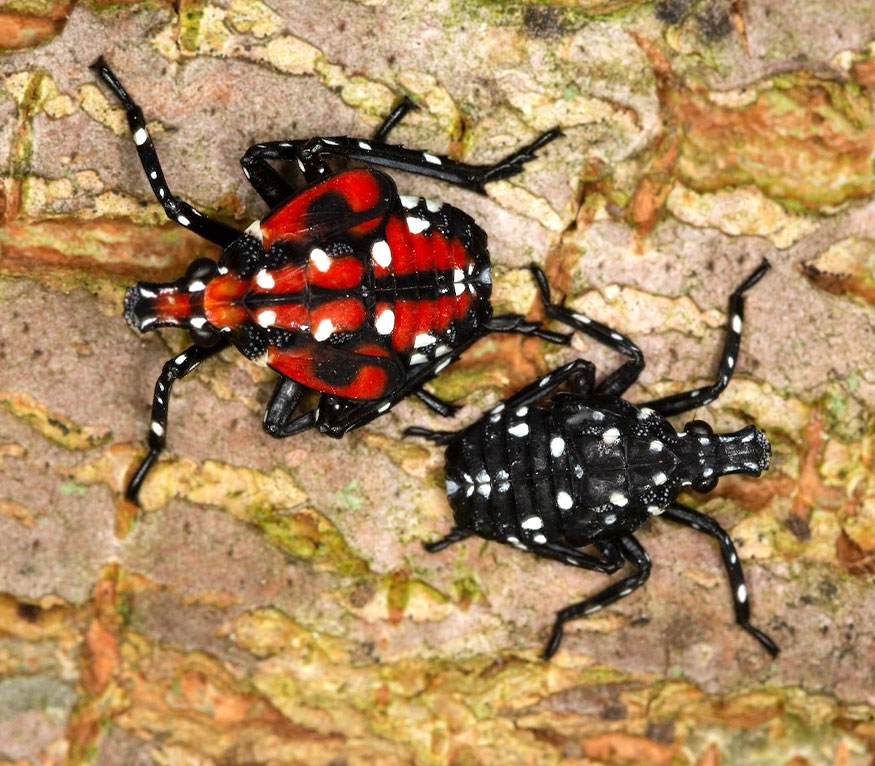
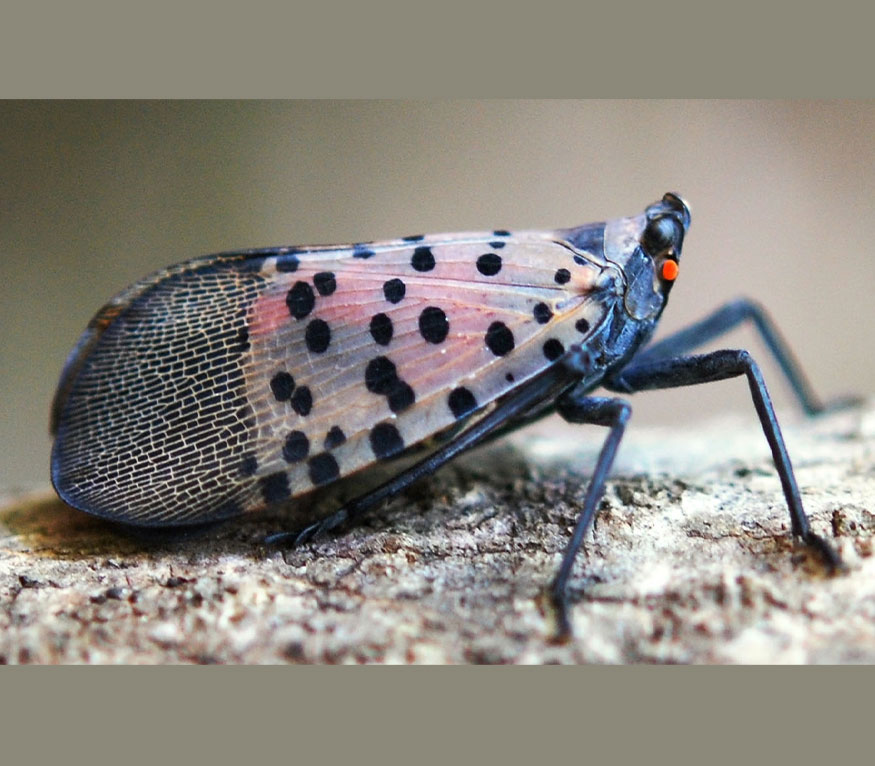
Nymphs are active and can jump long distances. Adults begin to emerge in July and remain active until killed by late-fall freezes. Adults have wings and can fly short distances, although they mainly move by walking and jumping. They also frequently hitchhike on human transportation and equipment.
Damage
More research and observation is needed to fully understand the impact of the spotted lantern fly on Connecticut agriculture. Adults and nymphs use piercing-sucking mouthparts to feed on sap from stems, leaves, and trunks. Excess sugar in the sap is excreted as a liquid waste called honeydew. Honeydew attracts many other insects and can support sooty mold growth. Sooty mold can cover leaves, reduce photosynthesis, and stain outdoor structures or vehicles near infested trees.
SLF feeding may cause flagging and localized branch damage. Their feeding habits are especially harmful to grapevines, where they have been observed to reduce yields and fruit quality because of sooty mold on fruit skins.
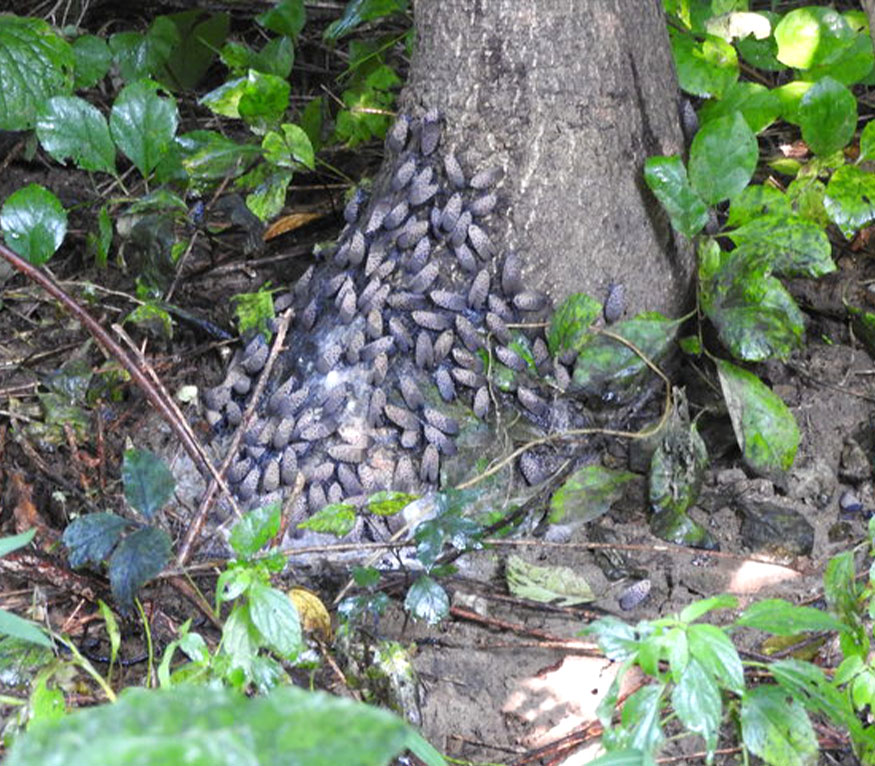
Heavy feeding on grapevines can weaken plants, reduce winter hardiness, and even cause vine death. SLF can occur in large swarms while feeding and mating. They do not bite or sting but are considered a nuisance when present in large numbers (Figure 5).
Monitoring
Scouting and correct identification are essential, since higher population levels cause greater plant damage. Monitoring should focus on high-value plants and crops. Monitoring can be done through visual inspection and trapping. Circle traps and sticky bands are two entrapment methods that can help estimate population size. During visual inspections, check field edges and host trees such as Tree of Heaven, black walnut, maple, willow, and birch. SLF sightings can be reported to the Connecticut Agricultural Experiment Station.
Management
There is currently no coordinated public program to control SLF in Connecticut. Preventing the movement of all stages of life is important, even though this insect can also spread on its own.
Vehicles and agricultural products should be inspected to reduce spread through human activity. Cultural control can include removing preferred host plants, especially Tree of Heaven. Mechanical control can include destroying eggs by scraping or crushing egg masses from fall through Spring before hatch. Many SLF eggs are laid high up in trees out of reach without assistance or equipment.
Traps such as circle traps and sticky bands can be used to manage populations, but they may also capture non-target species. In agricultural settings, populations can be managed with contact and systemic insecticides when SLF is present at unacceptable levels.
Contact insecticides effective at managing SLF include Beta-cyfluthrin, natural pyrethrins, insecticidal soaps, horticultural oils, and others*.
Effective systemic insecticides include imidacloprid and dinotefuran. All insecticides must be applied after plant bloom and during a period when pollinating insects are not active to reduce off target effects.
Always follow all label directions and regulations from the Connecticut Pesticide Program. Currently, there are no recommended biological control options for SLF. More information about managing SLF can be found in the Penn State Extension SLF Management Guide.
*It is important to note that pesticides labeled for agricultural use are not necessarily labeled for field border vegetation. Please read and follow all label information.