Key Recommendations
- Do not wait for visible wilting; irrigate before more than half of the available soil water is . How to assess the available soil water is outlined below;
- Most vegetables need about one inch of water per week from rain plus irrigation; during hot, sunny, windy weather, demand may approach two inches per week;
- Prioritize water for newly seeded/transplanted crops, high-value crops, and crops at flowering, fruit set, silking, tuber set, or head development;
- Use drip irrigation, mulch, soil moisture sensors, weed control, reduced compaction, and soil organic matter building to improve drought resilience;
- In plastic-mulched systems, do not count rainfall as crop water. Rain often runs off the bed, and does not recharge the root zone under the mulch.
How Much Water do Vegetables Need?
A practical starting point is one inch of water per week from rainfall plus irrigation. During high evapotranspiration conditions, crop water loss can reach about 1/3 inch per day, or roughly two inches per week. Adjust irrigation based on crop stage, soil type, rooting depth, irrigation system, rainfall, mulch, wind, temperature, humidity, and canopy size.
Table 1. Water volume equivalents. One inch of water is approximately 27,154 gallons per acre or 62 gallons per 100 square .
| Water depth | Per acre | Per 1,000 sq ft | Per 100 sq ft |
| 1 inch | 27,154 gal | 623 gal | 62 gal |
| 1.5 inches | 40,731 gal | 934 gal | 93 gal |
| 2 inches | 54,308 gal | 1,246 gal | 124 gal |
Note: One acre-inch equals 43,560 square feet x 1/12 foot = 3,630 cubic feet of water. Since 1 cubic foot of water equals 7.48 gallons, 3,630 cubic feet x 7.48 = approximately 27,154 gallons per acre-inch. Values for 1,000 square feet and 100 square feet are proportional conversions from the acre-inch value.
Critical Periods for Irrigation
Vegetable crops should ideally avoid water stress throughout growth, but certain stages are especially important for yield and quality. When water is limited, prioritize fields in the critical stages listed below.
Table 2. Critical irrigation periods for common vegetable crops (Adapted from Irrigation section in the New England Vegetable Management Guide, 2026)
| Crop | Most critical water period |
| Asparagus | Spear growth and fern growth |
| Broccoli, cabbage, cauliflower | Transplanting and head/curd development |
| Carrot, radish, turnip, rutabaga | Root enlargement |
| Cucumber, squash, melon, watermelon | Flowering, pollination, and fruit enlargement |
| Eggplant and pepper | Transplanting, flowering, and fruit development |
| Lettuce and spinach | Throughout growth, especially leaf/head expansion |
| Onion | Transplanting and bulb enlargement |
| Potato | Tuber set and enlargement |
| Snap bean, lima bean, pea | Flowering, pod set, and pod enlargement |
| Sweet corn | Tasseling, silking, and ear development |
| Sweet potato | Slip establishment |
| Tomato | Transplanting, early flowering, fruit set, and fruit enlargement |
Irrigation Scheduling
Visible wilting is a late warning sign. By the time plants wilt, yield or quality may already be affected. Use field observation together with soil moisture monitoring, soil feel, irrigation records, rain gauges, and weather forecasts. Irrigate before more than half of available soil water has been used. In most soils other than heavy clay, irrigation decisions commonly occur around 30-60 kPa on granular matrix sensors, depending on crop, soil texture, and irrigation method.
Simple sensor placement for drip irrigation: place one sensor near the active root zone and about 6 inches from the drip tape. A shallow sensor helps decide when to begin irrigating; a deeper sensor helps determine whether water has reached the lower root zone. Use multiple locations in variable soils.
For growers without soil moisture sensors, the soil-feel method is a useful starting point. Use a trowel, soil probe, or shovel to check moisture six to eight inches deep near the active root zone, not just at the soil surface. Surface soil may look dry even when the root zone still has moisture, or it may look moist after a light rain even though the lower root zone is still dry. Combine this observation with crop stage, recent rainfall, irrigation records, and the weather forecast.
Soil Type and Drip Irrigation
Sandy soils hold less plant-available water than loam and silt loam soils, so they need smaller, more frequent irrigations. Heavier soils can hold more water, but over-irrigation can cause ponding, root disease, runoff, and nutrient leaching. Drip systems are efficient because water is delivered near the crop root zone with less evaporation than sprinklers, especially when drip tape is placed under plastic mulch.
- On sandy soils, irrigate more frequently for shorter periods to reduce leaching;
- On loam and silt loam soils, irrigate less often but long enough to wet the active root zone;
- Use filters, pressure regulators, and line flushing to reduce emitter clogging and uneven watering;
- Use backflow prevention when injecting fertilizer or agrichemicals; backflow prevention is required for systems with injectors;
- With drip irrigation under plastic mulch, rainfall less than one inch generally should not replace a planned irrigation; rainfall greater than one inch may allow irrigation to be delayed.
Heat, Drought, and Crop Quality Problems
Heat and drought often occur together. Common quality problems include poor transplant establishment, blossom-end rot in tomato and pepper, fruit cracking in tomato after irregular watering, poor pollination and fruit set, tip burn in leafy greens, small or misshapen fruit, reduced ear fill in sweet corn, sunscald, and more severe mite, thrips, aphid, or flea beetle pressure in some crops. Consistent soil moisture and reduced plant stress are the best prevention strategies.
When Water is Limited, Prioritize
| Higher priority | Lower priority |
| Newly seeded and transplanted crops | Crops past peak harvest |
| High-value crops near harvest | Pumpkins, winter squash, onions, and potatoes entering curing/dry-down |
| Crops at flowering, fruit set, silking, tuber set, or head development | Lower-value fields where irrigation cost exceeds likely return |
| Plastic-mulched crops that depend on drip irrigation | Organic mulched crops |
| Crops on sandy or shallow soils, and high-tunnel crops | Crops on heavy soils |
Practices That Improve Drought Resilience
- Build soil organic matter - This is s a long-term drought-resilience strategy, not an emergency fix during an active drought, but growers can start planning for next season by using cover crops, compost or other organic amendments, reduced tillage where practical, and residue management. Organic matter improves aggregation, infiltration, rooting, and water storage. Each one percent increase in soil organic matter may increase water-holding capacity by about 1/2 inch per foot of soil depth.
- Reduce compaction - Use controlled traffic, avoid working wet soils, reduce unnecessary tillage, and use cover crops where practical. Compaction limits rooting depth and reduces infiltration.
- Use mulches and residues - Organic mulches, plastic mulch, biodegradable mulch, crop residue, and landscape fabrics can reduce soil evaporation and moderate temperature. Remember that plastic mulch also limits rainfall entry into the bed.
- Control weeds early - Weeds use water and increase evapotranspiration, especially before crop canopy closure.
- Use shade strategically - Shade cloth can reduce heat and light stress during heat-sensitive periods.
- Choose varieties and planting dates carefully - Shorter-season varieties and adjusted planting windows can reduce drought risk. Grafted tomato, watermelon, eggplant, and pepper plants may improve vigor under stress but do not replace good irrigation management.
Weekly Drought-Management Checklist
- Check the U.S. Drought Monitor (see the references below) and local rain gauge records;
- Inspect drip lines for leaks, pressure problems, and clogged emitters;
- Check soil moisture at root depth, not only at the soil surface;
- Walk sandy areas, field edges, and high tunnels first;
- Prioritize irrigation during crop critical periods;
- Avoid deep cultivation during hot, dry weather because it can prune roots and dry soil;
- Ventilate tunnels early and consider temporary shade for heat-sensitive crops;
- Delay stressful operations such as heavy pruning, transplanting, or certain sprays during peak heat.
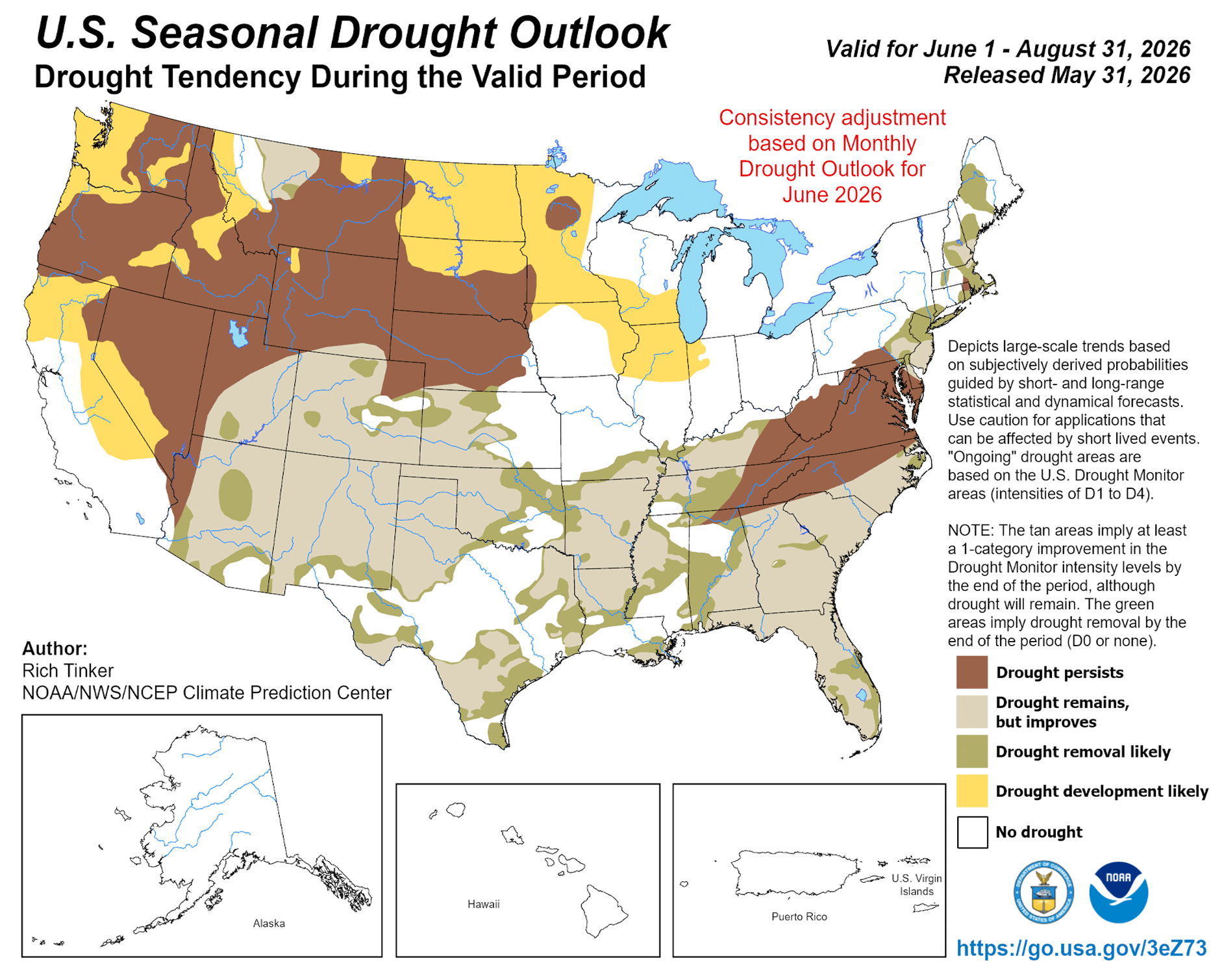
Figure 1. U.S. Season Drought outlook for June to August, 2026.
Conclusions
Drought management is not just emergency irrigation. It is a season-long system that combines soil health, irrigation design, soil moisture monitoring, weed control, mulch management, fertigation, and crop-stage prioritization. The most reliable approach is to monitor early, irrigate before stress is visible, protect the root zone, and prioritize water during sensitive crop stages.